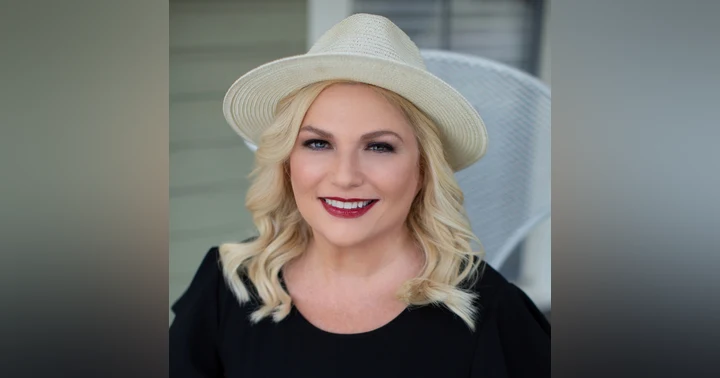
What Nocatee Buyers and Sellers Get Wrong in 2026 Ep. 335 Lisa Vernon

Lisa Vernon has sold every home she's listed in Nocatee. Not most. Every one. In a market she says is down 6% to 8% with more than 200 expired listings at one point, that record isn't luck — it's a pricing conversation most agents avoid having.
Lisa joins Tracy Hayes for Episode 335 to break down how she got there, starting in 1998 on the mortgage side. Commercial Credit, then EverBank, Washington Mutual, PHH — cubicle after cubicle, phone call after phone call. A difficult pregnancy in 2008 pulled her out of the business entirely. She came back in 2013 with a real estate license, a mentor at Keller Williams, and a vision board with a $52,000 income goal on it. She blew past it.
The phrase that anchors this episode is one Lisa learned watching her mother work model homes as a teenager: "Commission breath is when you can tell that that agent cares more about their commission than making sure you're making the right choice." She tells the story of a buyer named Lynn who was ready to sign — and Lisa asked to show her one more community first. Lynn bought in Nocatee instead, and still refers business years later.
Lisa gets specific on pricing, and she doesn't soften it. "A house is worth what a buyer is willing to pay for it. It does not matter what your numbers look like." She walks through a listing where the seller overrode her at the last minute and pushed the price back up — a home that could have sold in three weeks sat for two and a half to three months. Her assessment: he left money on the table fighting for a number that was not attainable.
There's also a save. A pool home under contract at 99% of ask, a 12-year-old roof, and an insurance market she describes as squirrely. Lisa called every previously interested party, found none available, and structured a deal where the roofer waited for payment until closing so it never came out of her sellers' pockets. Nobody was happy that day. Those sellers are now among

 Apple Podcasts
 Spotify
 Overcast
 Castro
 PocketCasts
 RSS Feed
 Would you risk losing a commission today to protect a client from making the wrong decision for their future?
In this episode of the Real Estate Excellence Podcast, Tracy Hayes sits down with Lisa Vernon. Lisa Vernon is the owner broker of Imagine Real Estate in Nocatee, Florida, a real estate professional with mortgage experience dating back to 1998 and more than 240 transactions behind her. Known by clients as the House Whisperer, Lisa shares how her early financial background, psychology education, family experiences, mentorship, and knowledge of Northeast Florida shaped her client centered approach.
Lisa explains why agents need mentors, operating systems, honest pricing conversations, transaction support, and the confidence to put a client’s interests ahead of an immediate commission. She also explores the realities of selling in Nocatee, navigating roof and insurance concerns, handling emotional negotiations, avoiding lowball mistakes, protecting new construction buyers, and helping relocating families find the community where they truly belong.
Listen to the full episode to discover how integrity, preparation, local expertise, and calm communication can transform difficult transactions into lasting relationships and lifelong referrals.
HighlightsTop of FormBottom of Form
00:00-10:15 Lisa Vernon and the Nocatee Lifestyle
- Real estate market cycles and long-term value
- Jacksonville growth after COVID
- Why Lisa chose Nocatee
- Golf cart living and community amenities
- Nocatee compared with Reston Virginia
10:16-16:26 From Psychology and Mortgages to Real Estate
- Graduating from Flagler College
- Starting in consumer finance
- Moving into the mortgage industry
- Leaving the corporate cubicle environment
- Transitioning into real estate after motherhood
16:27-25:37 Choosing a Brokerage and Finding Mentorship
- Why the first brokerage matters
- Starting at Prudential in Ponte Vedra Beach
- Treating real estate like a real job
- Finding accountability through mentorship
- Building goals around family and purpose
25:38-36:31 Building Systems and Delegating the Work
- Creating standard operating procedures
- Using checklists to protect every transaction
- Hiring a transaction coordinator
- Delegating work to an assistant
- Keeping the client experience as the priority
36:32-46:45 Integrity Client Trust and the Wow Factor
- Avoiding commission breath
- Guiding clients toward the right community
- Choosing the client over the immediate sale
- Building trust through honesty and confidence
- Creating lifelong referrals through extra effort
46:46-01:28:34 Negotiations Pricing New Construction and Community
- Handling difficult listings and negotiations
- Pricing homes according to buyer demand
- Managing low offers without emotion
- Protecting buyers in new construction
- Helping clients find the right community fit
Quotes:
“It was the right choice for them, not the right choice for me. It’s not about me. It has to be about them.” – Lisa Vernon
“Your job is to not let the balls drop.” – Lisa Vernon
“A house is worth what a buyer is willing to pay for it.” – Lisa Vernon
“I get to be a part of their family, and that’s why I do it.” – Lisa Vernon
To contact Lisa Vernon, learn more about her business, and make her a part of your network, make sure to follow her Website, Instagram, Facebook, and LinkedIn.
Connect with Lisa Vernon!
Website: https://imagineflorida.com/
Instagram: https://www.instagram.com/lisavernonrealtor/
Facebook: https://www.facebook.com/lisa.vernon17/
LinkedIn: https://www.linkedin.com/in/lisavernonrealtor/
Connect with me!
Website: toprealtorjacksonville.com
Website: toprealtorstaugustine.com
SUBSCRIBE & LEAVE A 5-STAR REVIEW as we discuss real estate excellence with the best of the best.
#RealEstateExcellence ##LisaVernon #RealEstateExcellence #ImagineRealEstate #HouseWhisperer #NocateeRealEstate #NocateeFlorida #JacksonvilleRealEstate #NortheastFloridaRealEstate #FloridaRealtor #RealEstateBroker #RealEstateMentorship #ClientExperience #RealEstateNegotiation #HomeSellingTips #HomeBuyingTips #NewConstructionHomes #RealEstateIntegrity #ListingAgent #RealEstateSystems #PodcastInterview
Are you ready to take your real estate game to the next level? Look no further than Real Estate Excellence - the ultimate podcast for real estate professionals. From top agents and loan officers, to expert home inspectors and more, we bring you the best of the best in the industry. Tune in and gain valuable insights, tips, and tricks from industry leaders as they share their own trials and triumphs. Whether you're a seasoned pro or just starting out, a homebuyer or seller, or simply interested in the real estate industry, Real Estate Excellence has something for you. Join us and discover how to become a true expert in the field.
The content in these videos and posts are for informational and educational purposes only. The information contained in the posted content represents the views and opinions of the original creators and does not necessarily represent the views or opinions of Townebank Mortgage NMLS: #512138.
REE #335 Transcript
[00:00:00] Lisa Vernon: No matter how long I've been in it, I'm always learning something, but the most important thing is I get to be a part of so many people's lives. There is always some reason why they're moving.
Tracy Hayes: Hey, welcome back to the Real Estate Excellence Podcast. My guest today has been in real estate since 1998, but she didn't start as an agent. She started on the mortgage side, learning how deals actually get financed before she ever wrote an offer. Today, [00:01:00] she is the owner-broker of Imagine Real Estate in Nocatee, Florida, with more than 240 transactions behind her.
[00:01:07] Tracy Hayes: Her clients call her the House Whisperer, so we're gonna find out what that's all about. Let's welcome Lisa Vernon to the show.
[00:01:14] Lisa Vernon: Hi. Thank you for having me.
[00:01:15] Tracy Hayes: Well, I appreciate you coming down this morning. You've got probably—not quite—about six years more than me here, I think, in the business.
So, we've got a lot of stories, a lot of things. I think some of the newer agents—a lot of these, I call them the post-COVID agents—they haven't really seen... They've seen the market change when the rates went up in 2022, but they haven't seen what we've seen. You know, what we were in the early 2000s, obviously ’07, ’08, ’09, and ’10, and then obviously how we've survived these last 16, 17 years in this business and seen the cycles.
[00:01:48] Lisa Vernon: Yeah, for sure.
[00:01:49] Tracy Hayes: Yeah.
[00:01:49] Lisa Vernon: I actually had a meme recently where it was basically kind of showing some different people screaming. Like, if they were in the business in the last three years, last five years, and then [00:02:00] you've been in here the last 20 years, and it's Karen from Will & Grace sipping a martini. Just—we've seen it all.
We've gotten used to the understanding that it's gonna be a roller coaster, but it always ends up great in the end. Like, real estate is still a great investment—
[00:02:14] Tracy Hayes: For everyone. I think people underestimate, ’cause if you really sit back and look at it from 30,000 feet—
[00:02:20] Lisa Vernon: Mm-hmm.
[00:02:21] Tracy Hayes: You know, obviously economies change for whatever reasons. Decisions are made, things shift. But even if you really get—what is it you wanna call it?—microeconomics to it—
Lisa Vernon: Mm-hmm.
Tracy Hayes: And get right down to the regions, you think of Florida back in the ’70s and ’80s versus all of a sudden how it all started to explode as people started to, “Hey, you know, we can actually survive in air conditioning in Florida,” you know?
[00:02:50] Lisa Vernon: Exactly. I can remember—I was born in Jacksonville.
Tracy Hayes: Yeah.
Lisa Vernon: Right down in Baptist, Baptist Downtown. But I lived in Tampa and Pembroke Pines and [00:03:00] everything, and I remember I would be driving with my family to come visit them up—they lived in Middleburg, some of my mom's brothers—and you'd see these things on the side of the road like, you know, “Houses starting at $30,000.”
Tracy Hayes: Yeah.
Lisa Vernon: And I can remember that in my head, and I know a lot of people are like—they thought that Jacksonville went way too much up after COVID, but in actuality, I think we were so devalued. Like, we might have gone up too much, but we were so devalued—
[00:03:26] Tracy Hayes: Yes.
[00:03:26] Lisa Vernon: For so long as a major city—
[00:03:28] Tracy Hayes: Yeah.
[00:03:28] Lisa Vernon: That once people saw what was available here, and they came down and they liked it, and they had air conditioning and kind of some seasons, I think it made a big difference in our market.
[00:03:40] Tracy Hayes: Well, there's no doubt. Well, there's still this no-man's-land north of the greater Tampa, Crystal Springs area, all around—I guess, you know, the Panhandle corner, whatever you wanna call it—but that is hurricane alley too.
[00:03:56] Lisa Vernon: Yeah, yeah.
[00:03:56] Tracy Hayes: The hurricanes like to go right up in that corner. But when it comes [00:04:00] to the major cities, though—
[00:04:02] Lisa Vernon: Right.
[00:04:02] Tracy Hayes: Obviously Miami—been there. St. Pete, you know, you go over there and see how old some of those cinder-block houses—which we still have some here around the naval base—
Lisa Vernon: Oh, yeah.
Tracy Hayes: The type of homes that were built post-World War II. But those areas have had their heyday. I mean, obviously we know Tampa's still a very hot market, and Sarasota, Bradenton, and in that area. But I think, like you said, people are coming down, especially from up north, and realizing, “Well, it's a lot less. It's more reasonable.”
[00:04:30] Lisa Vernon: Mm-hmm.
[00:04:31] Tracy Hayes: And there's a lot of things to do here.
[00:04:33] Lisa Vernon: Oh, yeah.
[00:04:34] Tracy Hayes: Yeah.
[00:04:34] Lisa Vernon: Especially Nocatee, which is where I work a lot now. Now, I've worked all over Northeast Florida, but since we lived in Nocatee—and I've been there since 2013—I've worked there a lot now.
[00:04:46] Tracy Hayes: Yeah.
[00:04:46] Lisa Vernon: And, you know, you ride over the ditch and you're at the beach. You know, you're right there at Mickler's. And, you know, you go down and you're in Old Town St. Augustine, where Flagler College—which is where I went to college. So, yeah, I haven't gotten [00:05:00] that far.
[00:05:00] Tracy Hayes: Mickler's or Mickler's? It's Mickler's, isn't it?
[00:05:02] Lisa Vernon: It's Mickler's. Okay. You know what's funny is my mom lived here in Jacksonville, and she says she knew the Micklers. And I'm like, “I wonder if it's really Mickler's.” Like, maybe Mickler's is what the Ponte Vedra Beach set started calling it to make it sound like we had it all wrong.
[00:05:18] Tracy Hayes: Mm-hmm.
[00:05:18] Lisa Vernon: But my mom, who lived here in Jacksonville way back when, said she knew the family, the Micklers. So, but right now we call it Mickler's.
[00:05:27] Tracy Hayes: For those who don't know, there's a beach—Ponte Vedra everyone knows—because you take the road and it ends at the beach, and it's a public access. And Mickler's or Mickler's, you could pronounce it either way. Everyone knows what you're talking about.
[00:05:38] Lisa Vernon: Yes, yes. And I remember the way I remembered it is “Mikey Likes It,” which is a Life cereal thing, because it was really hard for me in the beginning, especially since my mom was telling me, “Well, I knew the Micklers, and they were—”
[00:05:49] Tracy Hayes: Mm.
[00:05:50] Lisa Vernon: “It was Mickler's.”
[00:05:51] Tracy Hayes: Well, so you said you moved to Nocatee in 2013. That's kind of like about the time it really got started, right?
Lisa Vernon: Yeah, yeah.
Tracy Hayes: I mean, I know [00:06:00] the Del Webb neighborhood was there, one of the earliest neighborhoods, correct?
Lisa Vernon: Right, right. And, I mean, it was starting to be built, like, you know, right around 2007, 2008, when everything was, you know. And you'll still find the houses out there built around that time, and they have, like—I call it the safe room, but they call it the hurricane room now—because they didn't... But they were in the middle of nowhere.
They were truly in the middle of nowhere, so it didn't really fall on my radar right away. Like, we were living in Bartram Springs, and we had moved from up near Harbor Winds, which is Kernan, Atlantic Boulevard, and all that. So I'd lived in different areas.
And the only time I really left for any extended time out of Florida was when my family moved to Northern Virginia, in this place called Reston. We're not dead. We're just resting.
[00:06:48] Tracy Hayes: I know. I lived in Fairfax. I lived in Centerville for most of the ’90s—
[00:06:51] Lisa Vernon: Oh, okay.
[00:06:52] Tracy Hayes: So I know what you're talking about.
[00:06:52] Lisa Vernon: Okay.
[00:06:53] Lisa Vernon: So, you know, it was the ’90s, ’cause I graduated in ’91. Yeah. So, so yeah, I was [00:07:00] doing real estate.
I had just started to do some more real estate. You know, it was part-time, all of that, and I had shown a couple houses in Nocatee. And I came home to my husband, who luckily decided to listen to me, ’cause it was a financial stretch for us at the time. We were about to have another baby, you know, and it just was—we knew it was gonna be a stretch, even then.
Tracy Hayes: Right.
Lisa Vernon: And I said, “I feel like this could be the next Reston. Like, I feel like they are planning it in such a way that they are creating a community unto itself.”
Tracy Hayes: Mm-hmm.
Lisa Vernon: You know, like, the people in Ponte Vedra Beach called it “Knock-a-Tree.” And yes, they did knock a lot of trees down.
[00:07:37] Tracy Hayes: They did.
[00:07:37] Lisa Vernon: But I worked in Ponte Vedra Beach at the time, and they were kind of snooty about it, I'll be honest.
Tracy Hayes: Mm-hmm.
Lisa Vernon: But they've seen what's happened now. Like, you know, you drive your golf cart everywhere. And other places say they're a golf-cart community. You can't go through the drive-through in your golf cart in most of these communities. We go through—
Tracy Hayes: No.
Lisa Vernon: Our Starbucks, our Dunkin' Donuts, you know, everything.
[00:07:57] Tracy Hayes: Well, I'm gonna get in—
[00:07:58] Lisa Vernon: It's a whole different thing.
Tracy Hayes: Yeah.
[00:07:59] Tracy Hayes: I'm a little—[00:08:00] I'm a little, um... Well, my naysaying of the golf carts and the e-bikes, which—
[00:08:06] Lisa Vernon: E-bikes are...
[00:08:07] Tracy Hayes: E-bikes—
[00:08:07] Lisa Vernon: Don't get me started on e-bikes.
[00:08:08] Tracy Hayes: Yeah—is the parents who are like, “Oh, it's just a golf cart,” go let their child drive it around.
Lisa Vernon: No.
Tracy Hayes: And drive it on streets with cars.
[00:08:16] Lisa Vernon: Yeah. No.
[00:08:16] Tracy Hayes: No. Like, they're another car.
[00:08:17] Lisa Vernon: Yeah.
[00:08:18] Tracy Hayes: No. Uh, they're at Disney World on the racetrack and, you know, type of thing. It's like—
[00:08:22] Lisa Vernon: Oh, yeah.
[00:08:23] Tracy Hayes: The parents have got to take—I think it's obviously a huge lifestyle add.
Lisa Vernon: Yeah.
Tracy Hayes: And people are probably specifically attracted there—
Lisa Vernon: Yeah.
Tracy Hayes: Because of just that.
[00:08:35] Lisa Vernon: Yeah.
[00:08:35] Tracy Hayes: Yeah.
[00:08:35] Lisa Vernon: Oh, for sure. For sure. And it does. It's a huge difference. When we first moved to Nocatee, we didn't have a golf cart for, like, two years. I think it was two years. And I was like, “What's the point of having the golf cart or whatever?”
[00:08:46] Tracy Hayes: Well, the Publix didn't go in—when did the Publix open?
[00:08:49] Lisa Vernon: It was there before we got there.
Tracy Hayes: Was it? Okay.
Lisa Vernon: Yeah, it was there before we got there, 2013. But, um, but yeah, there were a few things at the town center. And when we bought a golf cart, we got the golf cart that you [00:09:00] could actually drive, like, on the golf course, on the golf course.
[00:09:03] Tracy Hayes: Okay.
[00:09:04] Lisa Vernon: Like, it went, like, you know, 12, 13 miles an hour. Sat two people up front and two people at the back, where, you know, the golf—
[00:09:11] Tracy Hayes: Facing the other way.
[00:09:11] Lisa Vernon: The, the—yeah, the other way, where the golf clubs would be. Yeah. But we just didn't wanna invest that much into it. But, you know, it was like, I'm like, “I'm doing a lot more real estate, and I think it'd be better if, like, I sometimes went on my golf cart—
Tracy Hayes: Yeah.
Lisa Vernon: To these things or whatever.” And I'm like, “So let's start small with just, like, the little golf cart and see how we are.” And that's the time our kids talk to us. Now, we don't have a radio. We have the better golf cart now, you know, got six to seven people.
Tracy Hayes: Yeah.
Lisa Vernon: Got, you know, the side mirrors on and—
Tracy Hayes: Yeah.
Lisa Vernon: It's got, like, the seat belts and, you know, got little—
[00:09:40] Tracy Hayes: Light-up lights in the front. Well, what's odd about that, 'cause when St. Johns Golf and Country Club, when we had to go through a process to be a golf cart community—
Lisa Vernon: Mm-hmm.
Tracy Hayes: Even though we're on a golf course, doesn't mean you can just drive on the streets with golf carts.
Lisa Vernon: Right.
Tracy Hayes: Whatever, extra signage and whatever type of thing. But if you look under—now, maybe the statutes have changed, 'cause, you know, I was on my CDD board—
Lisa Vernon: Mm-hmm.
Tracy Hayes: For [00:10:00] 11 years. And basically, 2020 was my last year. Those golf carts are technically legal—
Lisa Vernon: Yeah.
Tracy Hayes: In Florida.
Lisa Vernon: Yeah.
Tracy Hayes: They're only supposed to be four people max or some—whatever it is.
Lisa Vernon: Yeah.
Tracy Hayes: So, whatever the law says. Let's go back to—I wanna just go back to 1998.
[00:10:15] Lisa Vernon: Yeah.
[00:10:16] Tracy Hayes: Okay? What was going on? What got—what attracted you? Just opportunity to fall into the mortgage world? How'd you get started there?
[00:10:24] Lisa Vernon: So, I graduated from Flagler with my departmental award in psychology. I was—and I was so proud of myself.
And I had jumped colleges. I went to Virginia Tech for a year, and I hated it. And so I went home for a little while, and then I transferred to Flagler. And because of that, I didn't get that little, you know, six-month, you know, where you don't have to pay your student loans. I had to start paying it right away.
[00:10:47] Tracy Hayes: Right.
[00:10:48] Lisa Vernon: So I went to work at the Cracker Barrel for a few months just to, to wait tables, just to get some cash.
[00:10:54] Tracy Hayes: At 16 and 295?
[00:10:57] Lisa Vernon: And so, the one over in [00:11:00] Orange Park. Yeah.
[00:11:00] Tracy Hayes: Oh, okay.
[00:11:01] Lisa Vernon: Yeah. Okay. Over in Orange Park.
[00:11:02] Tracy Hayes: Oh, okay. And you travel—
[00:11:03] Lisa Vernon: Yeah.
[00:11:03] Tracy Hayes: Over there.
[00:11:03] Lisa Vernon: I told you I've been everywhere around Jacksonville. So, over there in Orange Park, and I got a job at Commercial Credit.
I don't like to say that, 'cause at the time I was too young to realize the interest rates they were charging people and how just terrible it could be for the person, you know, to get sucked into that if they haven't made some kind of financial plan.
So, as I was working there for a little while, and they were grooming me to become the branch manager, I was starting to help people with home equity loans and mortgages and trying to help them financially make decisions.
And it was basically—I was just gonna work there long enough to, you know, go for my graduate degree. You know, 'cause psychology and a bachelor's will get you a blue smock at Walmart.
Tracy Hayes: Yeah.
Lisa Vernon: It doesn't get you anything else.
Tracy Hayes: Yeah, yeah.
Lisa Vernon: But I found myself just really loving it, like, sitting down with people and having those conversations.
My dad always brought me up to be really financially savvy [00:12:00] and things, and not ignorant of, like, where your money's going and—
[00:12:03] Tracy Hayes: Right.
[00:12:04] Lisa Vernon: All of that kind of thing. And so, if I was gonna work at this place, I wanted to work at a place that—in the best possible way—to help people. So that's what I started doing.
And then I was like, “I am not becoming a branch manager of this place.” And so I found an actual mortgage company. God, I can't even remember. I've had so many mortgage companies—
Tracy Hayes: Mm.
Lisa Vernon: And they change their names all the time. But I found an actual mortgage company to work for, and I did love it. But the thing that I missed was people weren't coming into the office anymore.
By the time I got to EverBank, which used to be Alliance, and then when I got to Washington Mutual, like, you were just sitting in a cubicle talking on the phone—
Tracy Hayes: Yeah.
Lisa Vernon: Nonstop. Like, just phone call after phone call. And I just found myself moving every three years just so I could have a new cubicle, and I would feel like it was new again or something.
[00:12:54] Tracy Hayes: Right, right.
[00:12:54] Lisa Vernon: And so, last one was PHH Mortgage.
[00:12:58] Tracy Hayes: Yep.
[00:12:58] Lisa Vernon: And I was [00:13:00] there, and I got pregnant and, unfortunately, had a really bad pregnancy and just decided after that to stay home afterwards. And that's when I started turning the wheels about becoming a real estate agent.
My mom had been one, and I guess you don't wanna be your mom when you're younger.
Tracy Hayes: Mm-hmm.
Lisa Vernon: But as you get older, you're like, “Why fight it?”
[00:13:23] Tracy Hayes: She—
[00:13:23] Lisa Vernon: Was in new home sales. She's like what they call a site agent—
Tracy Hayes: Yeah.
Lisa Vernon: Up there in Northern Virginia. And it took me a while to fully come around to it. It was the kicking the wheels back there, and that's why in 2013—
[00:13:33] Tracy Hayes: Who did she work—what builder did she work for? Do you remember? Was it Ryan Homes?
[00:13:36] Lisa Vernon: She was—it was, I wanna say it was Miller & Smith or something like that.
Tracy Hayes: Okay.
Lisa Vernon: I'd have to ask her.
Tracy Hayes: Okay.
Lisa Vernon: I'd have to ask her. But yeah, she worked up there, and I would come on the weekends and help out and get the cards and put out the cookies and all of that kind of thing.
Tracy Hayes: Yeah.
Lisa Vernon: You know, I think she was trying to get me into it, but of course, as a teenager, I started, you know.
[00:13:52] Tracy Hayes: Well, the '90s were definitely a heyday for that area.
[00:13:57] Lisa Vernon: Yeah, for sure. For sure.
[00:13:57] Tracy Hayes: With building. My cousin, who I was [00:14:00] living with, he was working for a flooring company, did the floors for Ryan Homes.
[00:14:03] Lisa Vernon: Uh-huh. Okay.
[00:14:04] Tracy Hayes: As well as some other—some of the other—I think Renaissance was another builder. Pulte might have been part of that group, but they did—Simmons comes to mind, but I don't know—they did all the flooring. They were a big flooring company.
[00:14:13] Lisa Vernon: Yeah.
[00:14:14] Tracy Hayes: And he was doing sales and just traveling literally from Fredericksburg, you know, everything D.C. to Baltimore, out to Frederick, Maryland.
You know, they had their little showrooms and, you know, people came by appointment 'cause they bought from the builder, and that's how they did it.
Lisa Vernon: Yeah.
Tracy Hayes: But it was, it was, yeah, everything—it was going up like crazy there. So, what time period are we talking about? Yeah, you post-pregnancy—
Lisa Vernon: Mm-hmm.
Tracy Hayes: You decide, “Hey, I wanna stay home.” What are we—what year are we looking at?
[00:14:45] Lisa Vernon: So, 2008 is when—
Tracy Hayes: Okay.
Lisa Vernon: Yeah, 2008. 2008, I had preeclampsia and had Madison at 32 weeks. I almost died a few times.
Tracy Hayes: Oh, geez.
Lisa Vernon: She was in the NICU for a month and then at home on heart monitors for [00:15:00] another month. And so we stayed home. I—
[00:15:03] Tracy Hayes: Yeah.
[00:15:03] Lisa Vernon: I'd say I stayed home, you know. I'm a great believer in you do what's right for your family.
[00:15:07] Tracy Hayes: There's no doubt.
[00:15:08] Lisa Vernon: No—
[00:15:08] Tracy Hayes: Yeah, yeah, yeah. There's no questions there.
[00:15:10] Lisa Vernon: Yeah. Yeah. So I decided to stay home. We knew something—we didn't know until Madison was nine for sure. I'm surprised Early Steps didn't catch it, but we knew that there were some delays with Madison.
[00:15:21] Tracy Hayes: Mm-hmm.
[00:15:22] Lisa Vernon: And we had Early Steps come to the house. They went from not talking at, like, 18 months to talking in full sentences.
[00:15:29] Tracy Hayes: Oh.
[00:15:29] Lisa Vernon: So I guess they didn't figure the autism then because Madison's brilliant—
Tracy Hayes: Mm-hmm.
Lisa Vernon: And so they probably maybe, as—and also as a girl, probably didn't show it as much.
[00:15:41] Tracy Hayes: And then—
[00:15:42] Lisa Vernon: Different—
[00:15:42] Tracy Hayes: Different—
[00:15:42] Lisa Vernon: Levels, right?
Tracy Hayes: Different levels—
Lisa Vernon: Different levels—
Tracy Hayes: Of autism.
Lisa Vernon: Of autism. And they didn't catch it then. And then, so once they ended up going to, like, pre-K and everything, then I felt, “Okay, we've gotten a solid footing.” You know, talking in full sentences, looking like they're gonna be more brilliant than us, all that kind of stuff.
Tracy Hayes: Yeah.
Lisa Vernon: [00:16:00] That's when I started going back to work. So that's why 2013 is more when I started, when I got my license and everything. And I started part-time even then, and then I ramped up to full-time.
[00:16:10] Tracy Hayes: Just part-time being just—
[00:16:12] Lisa Vernon: A real estate agent.
[00:16:12] Tracy Hayes: Yeah, not doing another job, but just actually—
Lisa Vernon: Just doing that.
Tracy Hayes: You know, from home.
Lisa Vernon: Yeah.
Tracy Hayes: Taking care of the kids and, and, and doing—so one of the questions I think is so vitally important—I was, you know, I was talking to a literary person the other day—probably should write a book just on this question.
[00:16:26] Lisa Vernon: Yeah.
[00:16:27] Tracy Hayes: 'Cause I believe that many real estate agents, that first brokerage they go to—
[00:16:33] Lisa Vernon: Mm-hmm.
[00:16:34] Tracy Hayes: Makes or breaks too many agents. I think too many agents fall out. Will it solve all the agents falling out? No.
[00:16:41] Lisa Vernon: No.
[00:16:42] Tracy Hayes: We know there's people just, you know, just not fit for the business. It's just not them.
[00:16:45] Lisa Vernon: Yeah.
[00:16:45] Tracy Hayes: Type of thing. But I think many could be saved if they went to the right brokerage. What was your analysis on where you were gonna start?
[00:16:55] Lisa Vernon: Probably completely wrong. My mom and I drove around [00:17:00] because I was going off of her knowledge of what all of this was. You know, what they teach you when you get your license is completely different than what you use on a regular basis.
Tracy Hayes: Mm-hmm.
Lisa Vernon: It's just completely different. And so we drove around to see, you know, if we went into the actual office, who greeted us? How did it feel? Would somebody feel like they were being welcomed?
[00:17:19] Tracy Hayes: So Mom was giving you some coaching—
[00:17:20] Lisa Vernon: Yeah.
[00:17:20] Tracy Hayes: And some things to pick up—
[00:17:21] Lisa Vernon: On. Yeah, yeah. Yeah. Which would be great if I'd been a new site agent, but in actuality, hardly anybody comes to your office.
Tracy Hayes: Right.
Lisa Vernon: You know, you meet them at the Starbucks, you—whatever.
[00:17:30] Tracy Hayes: Right.
[00:17:31] Lisa Vernon: It's not very often they meet you there. So the first one I picked was Prudential. That was in Ponte Vedra Beach.
[00:17:37] Tracy Hayes: Which is now Berkshire—
[00:17:39] Lisa Vernon: Hathaway. And now it's Berkshire Hathaway.
Tracy Hayes: Okay.
Lisa Vernon: And the trainers were great. We got this training to be a union negotiator—train like you're a union negotiator—which is funny, 'cause my husband was a union negotiator for a while. So you should hear the two of us going at it sometimes. But anyway.
But I would go there, and [00:18:00] I would be there from the beginning to the end, and, like, there's hardly anybody there. It's like crickets. And that's when I started to realize, you know, that's why—what is it?—78% fall out?
[00:18:10] Tracy Hayes: Yeah.
[00:18:10] Lisa Vernon: You know, part of it—
Tracy Hayes: Right.
Lisa Vernon: Is you've gotta be, like—you've gotta want to treat it like a job job. And there where I was, since I was like—there were a few of us, and I still know some of them. I say hi to them. And I was like, “This isn't quite right.”
So I did stay there for a while. The training wasn't bad, but I knew this—this isn't it. This isn't gonna get me to where I wanna be.
[00:18:31] Tracy Hayes: Right. Well, did you know enough from—'cause the mortgage world is, you know, it's—I call it feast or famine.
Lisa Vernon: Yeah.
Tracy Hayes: There's times you're really busy, and then when they're slow, that's when you gotta run out and go do what you need to get done.
[00:18:41] Lisa Vernon: Yeah.
[00:18:41] Tracy Hayes: You take your vacation or whatever.
[00:18:43] Lisa Vernon: Yeah, for sure.
[00:18:43] Tracy Hayes: But when we know it's going to be busy, we, you know, we've gotta have our phone on, and of course now we can carry our laptops and—
Lisa Vernon: Yeah.
[00:18:50] Tracy Hayes: You know, wherever I can get Wi-Fi, I can write a loan.
[00:18:54] Lisa Vernon: Yeah.
[00:18:54] Tracy Hayes: It's not difficult to do. But having that kind of mentality and [00:19:00] mindset, 'cause I think the people who are not in our world—
Lisa Vernon: Mm-hmm.
Tracy Hayes: Who are nine-to-fivers, they don't fully comprehend. They think we have all this free time.
Lisa Vernon: Mm-hmm.
Tracy Hayes: They don't see us at 7:00, 8:00—
Lisa Vernon: Mm.
Tracy Hayes: Or when we are on vacation and the phone rings, we're, you know, walking away and taking that call.
[00:19:17] Lisa Vernon: Oh, yeah. You know? We—and you have to, because that's the business you signed up for.
You know, a lot of people who start in general real estate, you know, they end up becoming site agents because they just want a little bit more of a, “I'm off these two days, even if I do have to work the weekends.”
I don't have days off. I don't. And when I'm on vacation, I try to minimize. I let everybody know I'm going, you know, I try to minimize it, but I know that I'm going to be working—
Tracy Hayes: Yeah.
Lisa Vernon: While I'm on vacation.
Tracy Hayes: Yeah.
Lisa Vernon: I know I'm gonna be doing that.
[00:19:45] Tracy Hayes: 'Cause at Imagine—
Lisa Vernon: Yeah.
Tracy Hayes: You are—you’re the owner, broker, agent.
Lisa Vernon: Yeah, yeah.
Tracy Hayes: You're the everything.
[00:19:51] Lisa Vernon: Yeah, yes. I'm, I'm the everything. Yeah. I have, like, a transaction coordinator. I have an assistant to help me out, but when it comes to the breadth of knowledge and the things that [00:20:00] are not just paper being moved or checkboxes being checked, I'm the person they're gonna need to speak to—
Tracy Hayes: Yeah.
Lisa Vernon: In order to figure that out. So that is what it comes down to. What's that joke about, like, somebody asked me what it was like to be a real estate agent, and so I texted them until they cried?
[00:20:20] Tracy Hayes: That's—I never heard that one. That one's good. If you were—someone who might be listening right now—
[00:20:24] Lisa Vernon: Yeah.
[00:20:25] Tracy Hayes: Who may be thinking about getting in the business, or maybe have gone with that first brokerage and was like, “Ooh, maybe I made a wrong choice.”
But obviously, to make a move, you don't wanna just make a move to make a move. You wanna make, hopefully, the right move that's gonna, you know, turn out, 'cause now you've gone into your savings.
Lisa Vernon: Yeah.
Tracy Hayes: If not dwindled them down, you don't have really much more time to, to, to play around. You need to make the right choice.
Lisa Vernon: Yeah.
Tracy Hayes: What are a couple of things that you would say that they need to do in making that choice—either the first brokerage or to make a move? Some of the due diligence, some of the questions maybe that need to be asked or conversations—
Lisa Vernon: Mm-hmm.
Tracy Hayes: That need to be had.
[00:20:59] Lisa Vernon: I [00:21:00] think the biggest thing is finding a mentor. I didn't really have one. I mean, you can join a team. I was worried. My personality is—I think I knew that I was not gonna be able to sustain on a team long-term because I would want to have some control, and I wouldn't have it.
Tracy Hayes: Hmm.
Lisa Vernon: I would be, you know—
Tracy Hayes: Right.
Lisa Vernon: One of the cogs in the wheel. Totally understand that. I didn't wanna necessarily do that to a team either, because I don't wanna be that person who goes onto a team, gets all their knowledge, and then leaves. That—ugh.
So I found—oh my God, her last name is escaping me right now—Jen, over at Keller Williams over in the Mandarin area. And she was running something where it was basically coaching, and she would take a little bit of every deal that you did, and you would have that kind of coaching.
Tracy Hayes: Mm-hmm.
Lisa Vernon: And it was such a difference. It just—I went from here, closing, like, maybe $2 million a year, to I closed, like, $2 million in, like, two months or one month.
Like, it just ramped up so fast because there was somebody there, you know, keeping your brain—
[00:22:00] Tracy Hayes: Some accountability.
Lisa Vernon: Right. Accountability. Keeping your eye on the ball.
Tracy Hayes: Mm-hmm.
Lisa Vernon: Understanding what's busy work and what's real work, what's something shiny and what's something that you can actually use, and all of that. And it was just so helpful. Like, I think that made me who I became as an agent.
[00:22:16] Tracy Hayes: Do you recall, since this came to you, do you recall, like, something that still sticks with you today that maybe she told you or taught you or—
[00:22:23] Lisa Vernon: Yeah. Well, one of the things was—and there's psychology behind it too—
Tracy Hayes: Mm-hmm.
Lisa Vernon: It was basically, write down, like, your vision board. Like, what is it that you're working for? What is your reason? Because it can't be money.
I mean, money's nice, but it can't be just money, 'cause money is not—it's not gonna wake you up in the morning and get, like, you know, “Here's what I want for my family. Here's what I want for myself.”
Here, you know, and it may be a certain vehicle that you wanna drive around in, and that might sound like, you know, shallow or whatever, but it's something that you're envisioning for yourself.
It was basically owning a [00:23:00] house instead of a townhome, because at the time we had a townhome. It was wanting to make a certain amount of money within the next year to show that I actually—like, a solid number that I'm trying to achieve.
[00:23:12] Tracy Hayes: Mm-hmm.
[00:23:12] Lisa Vernon: Being able to have enough money to pay for someone to help me so I could spend more time with my kids because, of course, your family is your big why.
[00:23:20] Tracy Hayes: Mm-hmm.
[00:23:21] Lisa Vernon: And so she printed it out for me, and I can remember it. I think I wanted to make—it was like $52,000 a year was my goal.
Tracy Hayes: Yeah. Mm-hmm.
Lisa Vernon: It was $52,000 a year, and I had a picture of an SUV so all the kids could get inside—
Tracy Hayes: Mm-hmm.
Lisa Vernon: And I could carpool, and I had a picture of a house, and then I had a trip to France.
And it didn't happen all within the first year money-wise, perfectly. Like, that was—I shot past that. I was so happy.
[00:23:49] Tracy Hayes: So did you reverse it back to, like, “Okay, I wanna get to 52,000.”
Lisa Vernon: Yeah.
Tracy Hayes: “Here’s, basically, we know by statistical data I need to do these actions—”
Lisa Vernon: Yeah.
Tracy Hayes: “To get there.” Is that kind of how that—
[00:23:57] Lisa Vernon: Yeah. So they have the Keller Williams book—
Tracy Hayes: Mm-hmm.
Lisa Vernon: And they give [00:24:00] you this little thing that you can fill out. And it’s funny because I have the same book. And, like, I can see where I started, and then I just pencil in here, and then I pencil in here.
And so, to see, you know, as your millions in inventory start going, you change what you’re allotting because you can’t just hold onto that money miserly. You have to make sure that you’re investing it in certain things.
Tracy Hayes: Mm-hmm.
Lisa Vernon: Certain ways of moving forward if you wanna get to the next level. Do I think everybody needs to chase the next level to the detriment of their life and their family? No. I’m not into that whole hustle-no-matter-what thing.
[00:24:33] Tracy Hayes: Yeah.
[00:24:33] Lisa Vernon: I, I, I think you need to have, like, a plan, and you need to make sure that your life can sustain that plan.
[00:24:39] Tracy Hayes: Well, and I’m sure you’ve realized, being, you know, even in the mortgage and going into real estate, obviously there are a lot of agents who come and they go, “Oh, I wanna come in and I wanna have a team.”
[00:24:49] Lisa Vernon: Yeah.
[00:24:49] Tracy Hayes: I mention Christina Welch all the time.
Lisa Vernon: Mm-hmm.
Tracy Hayes: ’Cause, you know, everyone knows her, and she has a very successful team, but it took her time and a lot of sweat and a lot of stress [00:25:00] to evolve to where she’s at now.
Lisa Vernon: Right.
Tracy Hayes: But that is not for everybody either.
[00:25:06] Lisa Vernon: Yeah.
[00:25:06] Tracy Hayes: Whether you’re willing to do all the things that she did, and stress, and all, and people coming and going. I think she was at, like—even if you’re willing to go through all that—
[00:25:13] Lisa Vernon: Keller Williams too for a while, to be honest.
Tracy Hayes: Yeah.
Lisa Vernon: I’m trying to think of everybody who’s, like—I think a lot of people went through there.
[00:25:17] Tracy Hayes: Yeah. She now—she’s Keller Williams St. Johns.
Lisa Vernon: Yeah.
Tracy Hayes: Got her own—
Lisa Vernon: Yeah.
Tracy Hayes: With some partners there, her own franchise. But it, you know, she stayed in line long enough and—
Lisa Vernon: Yeah.
Tracy Hayes: She, as I’ve had her on, ran the Keller Williams play, as you were just describing.
Lisa Vernon: Mm-hmm.
Tracy Hayes: And, you know, that’s how she’s eventually got there. But that’s not—running a bunch of agents is not for everybody either.
[00:25:38] Lisa Vernon: No. I tried hiring someone on a while back, and eventually I’ll get back to that.
But what I realized was so much of it was internal, and I didn’t have all the SOP—standard of practices.
[00:25:51] Tracy Hayes: Mm-hmm.
[00:25:51] Lisa Vernon: And it was taking up so much of my time in order to do that, that I was like, “You know what? I think I need to get all this…”
You know, [00:26:00] she’d kind of—she’d come in, and she was wonderful. But I think she needed more of my time, and I needed more of her time. We were both kind of not meeting in that center.
[00:26:09] Tracy Hayes: Mm-hmm.
[00:26:10] Lisa Vernon: And I said, “Before I hire anybody else back on,” and I’m gonna take my time to do that because I was—I, I don’t think I’m the best person to pick people. So I have to think about that.
I needed all of this on something that they can refer to and not always be talking to me.
[00:26:26] Tracy Hayes: Mm-hmm.
[00:26:26] Lisa Vernon: And since it was mostly up in my head, that wasn’t gonna do anybody good. So that’s what I’m starting to do now, is try to get everything into a workable system where it’s not up here, but it’s on a piece of paper that somebody else can follow it.
[00:26:39] Tracy Hayes: Speak to how important—in, these things develop, and they’ll continue to develop—the operating procedures that you’re talking about.
Lisa Vernon: Yeah, yeah.
Tracy Hayes: Even for a solo agent.
Lisa Vernon: Yeah.
Tracy Hayes: You’ve gotta have some sort of script, and the only way to measure your success or you’re moving forward is to have done it enough times to go back and look at it and go, “You know, I need to tweak that.”
[00:26:57] Lisa Vernon: Yeah.
[00:26:58] Tracy Hayes: “I don’t need so much of that, but I need that.” But you [00:27:00] can’t do that necessarily on one transaction. You have to do a number of transactions doing that system before you realize, “Okay, I need to actually tweak some of these things.”
Lisa Vernon: Yeah.
Tracy Hayes: Talk to how important it is, and what was it? Was the mentor that taught you that? When did that really start to resonate with you—
Lisa Vernon: Mm-hmm.
Tracy Hayes: How important the operating procedure is?
Lisa Vernon: Right.
Tracy Hayes: Whether you’re solo or running a team of a bunch of agents—
Lisa Vernon: Right.
Tracy Hayes: You’ve gotta have those things.
[00:27:26] Lisa Vernon: I think there’s this thing on one of our NAR workbooks that we got one time, and it’s like, “What does a real estate agent do?” And it’s like 188 different things.
And what I realized really early on is if you don’t keep track of things, something’s gonna fall behind. And it’s not you just missing something. It’s you missing something that’s going to affect somebody else in a way of one of their biggest financial assets. You cannot be that person that lets that ball drop.
Your job is to not let the balls drop. So finding out as you’re going on, how is it best for [00:28:00] me to keep track of these things? What can I do to minimize it from being 188 items to maybe this many items, some things grouped together, and making sure we have, like, dates for them?
A transaction coordinator that worked at Keller Williams—I saw her sheet once, and I was like, “That makes so much sense.” Just little things like that to make sure nothing gets dropped, nothing gets forgotten, nothing is going on autopilot.
Because I think a lot of people miss that. They’re looking for their next sale without making sure. The most important thing I think we do is not just getting the sale or the contract signed. You have to get from the contract over the finish line. And unless you get over the finish line—
Tracy Hayes: That’s really when the work starts sometimes.
Lisa Vernon: Yeah, that’s where the work starts sometimes, especially during, like, you know, post-COVID and all that.
Tracy Hayes: Mm-hmm.
Lisa Vernon: I mean, you had stuff coming at you left and right, and if you didn’t have an operating procedure down, you would not be able to work all of those deals at the same time—
Tracy Hayes: Right.
Lisa Vernon: And make sure everything went the way it was supposed to go. And so, yeah, the work sometimes really starts after the [00:29:00] contract.
And so that’s one of those things that I had, like, little checklists for, but they only made sense to me. So I think before you start a team, you need to make sure that all of your stuff makes sense to anyone who just came in—
Tracy Hayes: Yeah.
Lisa Vernon: And just sat down and started writing.
[00:29:13] Tracy Hayes: What do you utilize today? You have a transaction coordinator.
Lisa Vernon: Mm-hmm.
Tracy Hayes: I know you mentioned something else, if you—
Lisa Vernon: An assistant, yeah.
Tracy Hayes: An assistant, yeah, that you have an assistant.
Lisa Vernon: Yeah.
Tracy Hayes: So what are some of the—transaction coordinator, just a pay-for-play?
[00:29:23] Lisa Vernon: Yeah, it’s pay-for-play from when we actually go under contract.
So, like, let’s say I’ve got a buyer.
Tracy Hayes: Mm-hmm.
Lisa Vernon: You know, I have to get a contract signed for us to go look at houses. But until they’re actually under contract on a house, the transaction coordinator’s not really involved.
It’s at that point that they start to help me with their checklist, the paper stuff, the stuff that I don’t necessarily have to be there for. But I still kind of check in from time to time because there are certain things on there, like lenders or termite bonds, things like that, that, like, they might not for every agent check, but for me are important, you know—
Tracy Hayes: Right.
Lisa Vernon: To making sure that they’re staying on [00:30:00] track and not finding out three weeks in that we have a problem. Let’s find out in one week that—
Tracy Hayes: Yeah.
Lisa Vernon: We have a problem.
[00:30:06] Tracy Hayes: Yeah.
[00:30:06] Lisa Vernon: Yeah.
[00:30:07] Tracy Hayes: Yeah, we’re gonna—we’re gonna dig a little deeper into the problem, but to round out your team, so what is your assistant doing?
[00:30:13] Lisa Vernon: My assistant—actually, this is kind of a new thing for me to have an assistant, but I’d gotten—we had had family coming first.
I have—my middle child has had a lot of mental health issues.
Tracy Hayes: Mm-hmm.
Lisa Vernon: And I just had to dial back.
Tracy Hayes: Yeah.
Lisa Vernon: You know, my family had to come first.
[00:30:27] Tracy Hayes: Yeah.
[00:30:27] Lisa Vernon: So I dialed back, and I needed somebody to help me with the things that I don’t have to do myself.
I have to have those conversations. I have to do the negotiations. I’m the one that’s gonna walk that house with you and make sure everything’s okay. But, you know, the paperwork, some of the posts—you know, like, send him my videos, which, you know, I hate to take.
Tracy Hayes: Mm-hmm.
[00:30:48] Lisa Vernon: And—
[00:30:49] Tracy Hayes: We’re gonna—we’ll send him the raw video, and he can cut what he wants out of this, for sure.
[00:30:54] Lisa Vernon: There you go. Yeah, ’cause he’s always telling me he wants more video.
[00:30:56] Tracy Hayes: Yeah.
[00:30:56] Lisa Vernon: But that’s what he’s for, is to basically [00:31:00] take some of that off of me so that I could concentrate more at home, and that’s what he has done—
Tracy Hayes: Mm-hmm.
Lisa Vernon: For me. And that’s been very, very helpful. And as we move forward, you know, he’ll probably take on a few more things, and I’ll probably take a few more things off my plate so I can, you know, grow the business.
[00:31:17] Tracy Hayes: Well, you know, even with some of the family challenges, as you’ve mentioned here, that have been something—but even just for an agent that doesn’t necessarily have the extra family obligations that you’ve had for your situation, to utilize a transaction coordinator, to utilize an assistant to do some of those things that will eat up your time, distract you, get you off focus of actually working on the business.
[00:31:45] Lisa Vernon: Right.
[00:31:45] Tracy Hayes: What have you noticed when you’ve leveraged these people, as far as you, one, having a peace of mind—
Lisa Vernon: Mm-hmm.
Tracy Hayes: And then just having more forward-facing time with your clients?
Lisa Vernon: Right.
Tracy Hayes: Because I think a lot of us don’t realize the best billboard you could [00:32:00] have is the actual client that’s in front of you, and wowing them—
Lisa Vernon: Right.
Tracy Hayes: With your attention, your, you know, communication, all those great things. Because that’s the person that’s gonna be the walking billboard to hopefully refer you a number of clients over the next several years.
[00:32:14] Lisa Vernon: Oh, yeah. And, you know—
[00:32:15] Tracy Hayes: And on.
[00:32:16] Lisa Vernon: Yeah, for sure. Yeah. And I, you know, it’s crazy too, ’cause some of the clients that take the most of your time, the most of your effort, sometimes the most of your sanity, end up being your biggest cheerleaders.
Tracy Hayes: Yeah.
Lisa Vernon: Because you went through it with them with grace. You didn’t add to their stress.
[00:32:31] Tracy Hayes: Yeah.
[00:32:32] Lisa Vernon: And so then the fact that they might have needed so much extra effort, now they’re spreading that news about you more than—
Tracy Hayes: Mm-hmm.
Lisa Vernon: Maybe the average person. And so that’s why it’s very important.
I realized at KW way back when, even when I wasn’t closing that much, I hired a transaction coordinator. ’Cause I could always see in my head, like—I could see all these agents spending all of this time doing all of this stuff and not answering their [00:33:00] phone and not going out and getting new business when I knew that—
Oh, God, what was it back then? It was like $195 or something. It was like nothing.
Tracy Hayes: Mm-hmm.
Lisa Vernon: $150. It was nothing.
[00:33:09] Tracy Hayes: Mm-hmm.
[00:33:10] Lisa Vernon: But agents were holding on with that grasping hand.
[00:33:13] Tracy Hayes: Well, they’re sending an email out and waiting for it to come back.
Lisa Vernon: Yeah.
Tracy Hayes: It’s like, no, you need to be actually out having coffee with somebody.
Lisa Vernon: Exactly.
Tracy Hayes: Talking about real estate.
Lisa Vernon: Yeah.
Tracy Hayes: You know, or going and getting educated more, whatever—
Lisa Vernon: Yeah.
Tracy Hayes: Whatever it is.
Lisa Vernon: Yeah.
Tracy Hayes: There’s no doubt. I think there’s—yeah, you know, they say, obviously, time blocking, but if you actually sat down there and wrote everything you did for every hour of the day and realized, you know, a lot of your time is on monotonous tasks that you can pay pennies over here.
That one extra deal oftentimes will pay—
[00:33:43] Lisa Vernon: Yeah.
[00:33:43] Tracy Hayes: For that person for the year.
[00:33:45] Lisa Vernon: Yeah, for sure.
[00:33:45] Tracy Hayes: If not, if not a good, good, good portion of the year.
Lisa Vernon: For sure.
[00:33:48] Lisa Vernon: And I think that’s what BOLD taught me. BOLD was also a Keller Williams thing.
Tracy Hayes: Mm-hmm.
Lisa Vernon: So I really did like—and I stayed with Keller Williams probably longer than I should have because the office had given me so much. But then the office changed, [00:34:00] and when it was no longer giving to me, when I was coming in and I was again in an empty office and Jen wasn’t there anymore, she had moved on, like, it just didn’t feel—
Tracy Hayes: Yeah.
Lisa Vernon: The same anymore.
[00:34:09] Tracy Hayes: Yeah.
[00:34:09] Lisa Vernon: And that was the time when I decided, okay, we’re ready to move on. If you can find an office like that, great, but it’s—most of it’s you.
Tracy Hayes: Yeah.
Lisa Vernon: You know? Like, most of it’s you. You’ve gotta get the wherewithal to get going with that.
[00:34:22] Tracy Hayes: It’s like I said, it’s matching that person that’s—as I often say, a broker’s biggest challenge is—
Lisa Vernon: Mm-hmm.
Tracy Hayes: Obviously, is they have to continue to add value. If they’re not adding value—
[00:34:33] Lisa Vernon: Yeah.
[00:34:34] Tracy Hayes: Or, you know, obviously management changes—
Lisa Vernon: Yeah.
Tracy Hayes: Or they get a different attitude, whatever it is—
Lisa Vernon: Yeah.
Tracy Hayes: Something changes there that—or maybe you’ve squeezed all the juice out of that orange, that now you need to go find another orange to squeeze—
Lisa Vernon: Yeah.
Tracy Hayes: Because you squeezed all the value that you could get—
[00:34:51] Lisa Vernon: Right.
[00:34:51] Tracy Hayes: Out of that person, ’cause that person was not continuing to stay ahead of you.
Lisa Vernon: Right.
Tracy Hayes: In other words, the broker or maybe the sales manager, whoever it is, the leader that creates that culture that [00:35:00] you went there for—
Lisa Vernon: Yeah.
Tracy Hayes: Because of the value they’re adding and how important it is.
And I think it’s important for agents, really, to—I’ve seen, I’ve had a few on the show that actually have been with the same brokerage—
Lisa Vernon: Yeah.
Tracy Hayes: Some of these big—for many years, like 20.
[00:35:13] Lisa Vernon: Yeah.
[00:35:14] Tracy Hayes: And then all of a sudden they changed recently, and I’m like, “Whoa, why’d you—?” And they were like, “I didn’t realize what was out there.”
[00:35:22] Lisa Vernon: Right.
[00:35:22] Tracy Hayes: “And that the brokerage that I was at was really not staying ahead of things, and I thought they were,” or just, you know, assumed, came in there and didn’t realize, holy cow, there’s this whole other world and this other brokerage who’s now cutting-edge. Now they’re the thing, right?
Lisa Vernon: Right. Yeah.
Tracy Hayes: Type of thing. So that’s out there.
All right, we’re gonna transition. We’re gonna go in, and I’m gonna just do a little for the audience. If you’ve noticed, if you’ve been listening to the last dozen or so episodes, I’ve been asking some very finer points of my guests’ business, where they work, and so forth.
And this is because of the post content that’s created from a great podcast in blogs and in the short reels. And [00:36:00] I’ve noticed my viewership, my subscribers’ pace has doubled since we started doing this, because what we’re gonna create is we’re gonna really get down into nitty-gritty.
Lisa Vernon: Mm-hmm.
Tracy Hayes: A lot of nitty-gritty questions here, but stuff that’s gonna, that’s gonna resonate. It’s gonna get out there because we’re creating great content, and hopefully people will find this episode or find one of the blogs that’ll lead you, and hopefully, you know, lead them to Lisa here.
So—
Lisa Vernon: Nice.
Tracy Hayes: Tell us, back at the beginning, what did growing up in those model homes teach you that you still use today?
[00:36:32] Lisa Vernon: I would definitely say that, when it comes to that, my mom—the way that she was kind of a warm, gracious presence when they came into the model home, the way that she kept track of everything.
Like, all of those little postcards that they filled out didn’t just get filed. Like, I can’t tell you how many open houses I’ve seen people do, and then, you know, where are they? What are they taking that information—
Tracy Hayes: Mm.
Lisa Vernon: What are they doing with that information? The fact that she knew everything about the [00:37:00] model home, and she didn’t have what I call commission breath.
Commission breath is when you can tell that that agent cares more about their commission than making sure you’re making the right choice. I don’t ever wanna be that person that’s pushing somebody into something. I wanna be the person that’s making them make that life decision.
And I know Lynn would be okay with me using her name. She was so gung-ho, her and her husband, to buy a property, and I had just met them. They had, like, one weekend or something like that.
But by the time the weekend was, like, winding down, she had decided on one place, and they had a CDD too. But it was not the social aspect. It wasn’t the calendar. It wasn’t all of the events. It was—and I could just tell that Lynn and her husband were just too much fun to be there.
And so I could have been that agent with the commission breath. They were ready to go in and sign, and I’m like, “Can I just take you to one other place?”
Tracy Hayes: Mm.
Lisa Vernon: It is just—’cause I don’t like to take people out of their price range, but it was only $20,000 more.
I’m [00:38:00] like, “Just let me take you over there because I don’t want you later on being, ‘Lisa, why didn’t you show me this?’”
Tracy Hayes: Mm-hmm.
Lisa Vernon: I know we didn’t ask you to see it.
[00:38:07] Tracy Hayes: Or you’ll lose sleep over it—
[00:38:09] Lisa Vernon: Yeah, yeah.
Tracy Hayes: ’Cause you didn’t show—why didn’t, why you didn’t ask me, you know, like, why?
Lisa Vernon: Mm.
Lisa Vernon: And I was like, “Let me take you over to Nocatee. Let me just show you,” ’cause the CDD’s almost exactly the same.
Instead of just some little pool and a little tiny—you know, ’cause the CDDs, it’s crazy.
Tracy Hayes: Mm.
Lisa Vernon: You go to some of these, all you get’s a pool and a little workout thing, and it’s the same CDD as you get at Nocatee with, like, what, nine pools?
Tracy Hayes: Mm.
Lisa Vernon: You—you—
Tracy Hayes: Yeah.
Lisa Vernon: Yeah. Two huge water parks. You can use anything that’s not behind a gate. Like, you can’t use Coastal Oaks or Del Webb, but everything else is yours.
Tracy Hayes: Right.
Lisa Vernon: So just go out and do it. And she talks about it to this day that, you know, she—I think she trusts me implicitly now because I could have just had that sale.
I could have just been done, but I took that extra time, took the chance I might lose altogether—
Tracy Hayes: Mm.
Lisa Vernon: ’Cause what if they decided after the whole weekend—
[00:38:53] Tracy Hayes: “Oh, now I’m confused.”
[00:38:54] Lisa Vernon: “I need to—we—now I’m confused. Now I’m not gonna do anything.”
Tracy Hayes: Right.
Lisa Vernon: But I just knew that wasn’t the right place for them.
Tracy Hayes: Yeah.
Lisa Vernon: And so I took [00:39:00] her over, and she ended up buying in the Palms in Nocatee and has loved it ever since.
She lives in Michigan, and she lives here in Florida, and she goes back and forth. And, you know, that was the right choice. It was the right choice for them, not the right choice for me.
Tracy Hayes: Yeah.
Lisa Vernon: It’s not about me. It has to be about them.
[00:39:15] Tracy Hayes: Yeah.
[00:39:16] Lisa Vernon: And that’s something my mom’s always taught me, is just, you know, you need to be looking to the other person and doing the right thing for them. And what you have is your integrity.
Integrity is who you are when no one—
Tracy Hayes: Yeah.
Lisa Vernon: Else is looking.
Tracy Hayes: Yeah.
Lisa Vernon: That sounds like a silly statement, but in actuality, I’ve met real estate agents that give me that feeling that I am in the right place. And it’s one of the reasons I created my own brand, is because I would work with other agents, and I didn’t wanna be associated with their brand.
[00:39:46] Tracy Hayes: Interesting.
[00:39:46] Lisa Vernon: If that makes sense.
Tracy Hayes: Yeah, yeah.
Lisa Vernon: I wanted to have a little bit more control over the perception of who we are, because Realtors can get a bad rap. The good ones—I would like to think I’m one of the good ones—like, we are here [00:40:00] because we love it. You have to love it to work the hours we do.
[00:40:03] Tracy Hayes: Well, talk about—see, this is something that’s very common with the top agents.
[00:40:07] Lisa Vernon: Mm-hmm.
[00:40:07] Tracy Hayes: And so someone asked me that recently. “What—give me something that you found a lot, you know, that’s very common—
Lisa Vernon: Yeah.
Tracy Hayes: In the best agents.” And that is that ability. In this case, when you said that, I thought of Robert Frost and the road less traveled—
Lisa Vernon: Mm-hmm.
Tracy Hayes: And it made all the difference. And you chose to take a road that many would not have taken, which was pull somebody off of actually being ready to sign a contract, give you a check right there for earnest money. But you decided, “Hey, let’s take a few minutes and ride over here.”
[00:40:39] Lisa Vernon: Yeah.
[00:40:39] Tracy Hayes: And like you said, it could have been some of these people would have been, “Oh, now I’m confused. I don’t know what to do. Let us go back to Michigan and think about it.”
[00:40:47] Lisa Vernon: Mm-hmm.
[00:40:47] Tracy Hayes: Yeah. And then who knows what happens in life and throws them. They might decide to move—
Lisa Vernon: To California instead.
Tracy Hayes: Right. Or Arizona or something like that. But—
[00:40:57] Lisa Vernon: People act like we make the big bucks, but they don’t realize that there’s, like, [00:41:00] so many people we work with for years and never move.
[00:41:02] Tracy Hayes: Yeah.
[00:41:03] Lisa Vernon: And we don’t get paid anything for any of it, but you still have to do what’s right.
[00:41:07] Tracy Hayes: Or decide they’re gonna rent another year.
[00:41:08] Lisa Vernon: Yeah.
[00:41:08] Tracy Hayes: At least—
[00:41:10] Lisa Vernon: At least what you think is right, you know?
Tracy Hayes: Yeah.
Lisa Vernon: Yeah, that could have backfired. But the thing is, I knew. Like, I had known. I had gotten enough from them that weekend to just know that they might have—that would have not been their people, their area. They would have been fine.
[00:41:24] Tracy Hayes: Yeah.
[00:41:24] Lisa Vernon: Who wants to be fine? Who wants to stroke that kind of check to be fine?
[00:41:27] Tracy Hayes: Well, that’s what I was—I’m getting at. I call it the wow factor.
Lisa Vernon: Mm-hmm.
Tracy Hayes: If anyone’s listening to the show, what is one of the things that top agents do? One of the things is the wow factor.
You wowed her because of your professionalism, your experience, and confidence. You said, “Let’s go look at this one other house just to make sure this one is the one for you,” right?
Lisa Vernon: Mm-hmm.
Tracy Hayes: I’m sure you said something like that.
[00:41:48] Lisa Vernon: Yeah, yeah, ’cause I didn’t wanna—I didn’t wanna, you know, try—
[00:41:51] Tracy Hayes: To discourage them.
[00:41:52] Lisa Vernon: Discourage them from that house. And I also—just because I have an instinct doesn’t mean I’m 100% right all the time.
Tracy Hayes: Right.
Lisa Vernon: But I have to do [00:42:00] what I feel is right for my client, and for my client, I felt they needed to see it. They never even brought it up. The entire area—I think they thought it was all kids.
You know, people think it’s all kids. It’s not all kids.
[00:42:10] Tracy Hayes: No.
[00:42:11] Lisa Vernon: It’s, like, 50/50.
[00:42:12] Tracy Hayes: Yeah. Yeah.
Lisa Vernon: Yeah.
Tracy Hayes: There’s a lot of grandmas who wanna live near their kids.
Lisa Vernon: Yeah.
Tracy Hayes: You know, grandkids. But that’s the wow factor. You went that one extra step you really didn’t have to take—
Lisa Vernon: Yeah.
Tracy Hayes: But you did, and that was the wow factor. And that’s why I’m sure this person has referred you other business.
You did something that they didn’t expect. They would’ve expected you to just say, “Well, here, sign this contract. We’ll make the offer.” You went the extra mile. You had a calculated risk there, but it’s because of your confidence and your professionalism. They followed you, and it’s because you did that that is the difference between—
Lisa Vernon: Mm.
Tracy Hayes: A top agent and an agent who isn’t doing top business, you know?
Lisa Vernon: Right.
Tracy Hayes: You know, year over year.
[00:42:51] Lisa Vernon: Yeah, no, I think it’s—and I think it’s hard for a lot of agents. We—I mean, you know, people joke about our income and all of that, but with the average agent making, like, [00:43:00] $30,000 a year or something like that, it’s basically a job where you make nothing for the longest time.
But you have to be very careful that that doesn’t make you miserly with the closed-fist mentality.
Tracy Hayes: Mm-hmm.
Lisa Vernon: It was when I learned, like, in the BOLD thing in Keller Williams too, even though I wasn’t making a whole lot of money, to have that feeling of there’s enough out there for everybody, there’s enough business out there for everybody—
Tracy Hayes: Yeah.
Lisa Vernon: There’s enough bounty for everybody, and to kind of relax those fists and not make it about me and what I’m supposed to put into my bank account next week in order to pay such and such.
Yes, those things are mindful things that you have to remember. You need to make sure you have enough savings before you start on a journey like that. But luckily, we were okay. Like, we were—
Tracy Hayes: Yeah.
Lisa Vernon: Living off of my husband’s salary, not counting mine at all, doing all the things we could do in order to make sure that I could deliver that kind of honesty.
[00:43:50] Tracy Hayes: You were a psychology major.
Lisa Vernon: Yeah.
Tracy Hayes: I wish—yeah, I should’ve been a psychology major. A lot of people go to work at a 9:00 to 5:00, and their thing is, “Okay, if I [00:44:00] just do the steps that they tell me to do and I get really good at it, then hopefully maybe I’ll get promoted, and then—or they just pay me more because I’m doing more.”
Lisa Vernon: Mm-hmm.
Tracy Hayes: But if I go and do what they ask me to do at a certain level, and then my personality—maybe I improve it—or my work ethic, I’m going to see—this, it’s almost a guaranteed path.
Sure, not guaranteed, but almost. Where it really is the same way in real estate. If you go at it, you’re looking to wow clients, you’re going the extra mile, eventually the snowball builds, and it actually builds 10 times, if not 100 times, faster than it ever would on a 9:00 to 5:00 thing.
Lisa Vernon: For sure.
Tracy Hayes: Because all of a sudden—and you’ve been in the business long enough—people are calling you. They’re seeing you as the expert. You wowed that person, and all they’re doing is bragging about, “Oh my God, you won’t believe this.” ’Cause they’re telling the same story: “Oh, we were about to buy this other house, but then Lisa showed us this one. Oh my God.”
And that story’s still being told today.
[00:44:59] Lisa Vernon: Yeah. [00:45:00] Well, I hope so. Yeah. I still hang out with Lynn, and every once in a while she gives me a discount on a—
[00:45:04] Tracy Hayes: On—
[00:45:05] Lisa Vernon: A Buick, ’cause she worked for the dealership—
[00:45:07] Tracy Hayes: Right.
[00:45:07] Lisa Vernon: Or whatever, so I get, like, a friends-and-family deal—
[00:45:09] Tracy Hayes: There you go.
[00:45:10] Lisa Vernon: On my Buick Enclave out there.
[00:45:10] Tracy Hayes: There you go.
[00:45:11] Lisa Vernon: But anyway, no, she’s—um, I think that as long as people can feel that you have their best interest at heart—
[00:45:17] Tracy Hayes: Mm-hmm.
[00:45:18] Lisa Vernon: I hear it a lot, like, “I’ve never known a Realtor like you.” Like, I hear that a lot, which makes me sad. It makes me feel good, but it also makes me sad that they haven’t known Realtors like me in the past, and that’s why their idea of what a Realtor was—
[00:45:30] Tracy Hayes: Right.
Lisa Vernon: Is horrible.
Tracy Hayes: Well, and a lot of that’s, I think, set up—I don’t know necessarily ’cause of TV, but obviously people aren’t buying houses every day.
Lisa Vernon: Mm-hmm.
Tracy Hayes: It’s not—you know, we buy cars more often than we buy houses. And, you know, it’s very easy to find one that’s mediocre or bad in your—
Lisa Vernon: Mm-hmm.
Tracy Hayes: Process, that when you actually run into somebody, it’s like, “Holy cow, this business can be done that way?”
[00:45:50] Lisa Vernon: Yeah.
[00:45:50] Tracy Hayes: You know?
[00:45:51] Lisa Vernon: Yeah. And it’s not even their fault sometimes. I mean, honestly, you take your real estate exam with a bunch of stuff that you’ll probably never use. It’s just enough to keep you out of trouble—
Tracy Hayes: Yeah.
Lisa Vernon: Out of [00:46:00] major trouble. That’s it. It has nothing to do with how to do your business, how to run your business, and it is a business.
It doesn’t matter how you look at it any other way, you’re an independent contractor. You know, who you work for—you know, my mom said the other day, and it just goes to show you that she was a site agent, so sometimes it still trips her up.
She goes, “Well, she works for Watson.” I’m like, “She doesn’t work for Watson.”
[00:46:22] Tracy Hayes: Yeah.
[00:46:22] Lisa Vernon: Watson is just Watson. What you make of Watson while you’re there is what that is. It has nothing to do with Watson.
[00:46:28] Tracy Hayes: Watson has her errors and omissions insurance.
Lisa Vernon: Yeah.
Tracy Hayes: Errors and omissions.
[00:46:32] Lisa Vernon: Yeah.
[00:46:32] Tracy Hayes: Yeah.
[00:46:33] Lisa Vernon: They’ll hire any—I call it like the spaghetti.
Tracy Hayes: Yeah.
Lisa Vernon: They’ll throw you up. They’ll see if you stick, you know?
[00:46:37] Tracy Hayes: Yeah.
[00:46:37] Lisa Vernon: It’s very rare. I think Compass is a little bit more, you know, they—you have to be a certain area. But most of them, they’ll just hire you and see what happens.
[00:46:44] Tracy Hayes: Yeah.
[00:46:44] Lisa Vernon: And it’s on you. It’s completely on you.
[00:46:46] Tracy Hayes: 100%. Yeah. This question was one we were kind of talking about before the show. I call it the cocktail or, you know, a social outing question.
Tell us about a situation you had recently that, you know, still sits with you. Maybe [00:47:00] a save, a great negotiation, or a house that just, you know, that you wanna let people know that these situations are out there.
[00:47:08] Lisa Vernon: Yeah. One of the things I like to say—and my husband says I need to stop saying it because I’m using it too much as, like, I’m holding onto it for dear life—every home I put on the market in Nocatee, I’ve sold. Every single one.
I don’t know many people who can say that, and it’s because I am—
[00:47:24] Tracy Hayes: Listings never expired.
[00:47:25] Lisa Vernon: Yeah. I’m very, very straightforward. Sometimes a little too straightforward.
Tracy Hayes: Mm-hmm.
Lisa Vernon: I have to pull back the inner bulldog and save it for negotiations on their behalf. But it’s because I see so many listings that get put up, and the person isn’t—the Realtor isn’t having that hard conversation with them.
They’re not telling them that this could happen, that could happen. This is why I’m thinking about pricing it here. This is why I don’t recommend pricing too far above and testing the market—
Tracy Hayes: Right.
Lisa Vernon: Because those first two weeks, you don’t get them back. If you’re off by a little bit, you know, the market might be okay.
But I tell people, a lot of people now with [00:48:00] roofs that are, you know, 12, 15 years old—it’s not right, since the roof is probably gonna be good for 25 years, but insurance companies now are being really squirrely.
Tracy Hayes: Yeah.
Lisa Vernon: So if your house is 15 years old, there’s a good chance they’re gonna have a hard time finding insurance. So they’re putting them on earlier.
But what’s happening is now the buyer, in this kind of market where the buyer—you know, it’s a buyer’s market in Nocatee right now—they’re coming from other places. They hear about our hurricanes. They don’t realize about the little Jacksonville curve—
Tracy Hayes: Or anything like that.
Lisa Vernon: They’re just thinking the worst things could happen. They don’t understand how the—
[00:48:32] Tracy Hayes: Gulf Stream affects it.
[00:48:33] Lisa Vernon: Yeah. Yeah, they don’t. So they’re just thinking, “Oh my God, I’m gonna close on this house, and before I move in, I’m not gonna have a roof.” That’s what’s in their head. That’s what’s in their head.
And it is my job to make sure that I work the best for my client, but at the same time, don’t lose sight that we all wanna get to closing. And sometimes the best deal is not a deal that you would’ve wanted to take before.
We were in a market where the comps [00:49:00] were getting lower and lower, even if it was a pool home, and we had somebody come in at 99% of ask, which was very rare for that area. Normally it’s 95 to 97, somewhere in that area.
[00:49:12] Tracy Hayes: And—
[00:49:13] Lisa Vernon: Everything was going swimmingly. We’re like—
Tracy Hayes: Mm.
Lisa Vernon: “Oh, 99% of ask. This is more than we were expecting.” We were very happy. But then the roof stuff came back because it was a 12-, 13-year-old roof.
[00:49:25] Tracy Hayes: Mm-hmm.
[00:49:26] Lisa Vernon: And it wasn’t bad. You know, all of us Floridians would look at that roof and say, “She’s fine. She’s fine. What are you talking about?”
But at that point in time, we’d already been through a certain number of days in an inspection period. I called every other person that had said that they were interested. All of them had either moved on or they had a house to sell, and the days on market could go over 100 in Nocatee right now, just like anywhere.
[00:49:51] Tracy Hayes: Yeah.
[00:49:51] Lisa Vernon: It can, so you’d be waiting forever for their house to get on, and then by then they might’ve found some other house they like better.
So I worked with another very [00:50:00] professional agent. He’d been in the business a long time, and we went back and forth and back and forth. And we finally found a way where they could get their new roof, but we could get the income that we needed for their next house.
And nobody wanted it. Like, it was not a happy day for anybody.
Tracy Hayes: Right.
Lisa Vernon: Either of us doing this negotiation.
Tracy Hayes: No.
Lisa Vernon: My sellers had no reason to put on that new roof whatsoever. But I showed them that the next available offer that was coming down the pike, like, it was gonna be lower than this one.
Tracy Hayes: Yeah.
Lisa Vernon: So let’s figure out how to make this work for everybody. And we found a way for the seller to pay some of—I mean, the buyer to pay some of the seller’s closing costs, all of these things that we could do. And the roofer would not accept payment until it closed, so that it wasn’t coming out of my seller’s pockets.
Was it happy for them at the time that it happened? No. But now he and she are one of my biggest cheerleaders [00:51:00] because no matter what they threw at me, no matter how stressed that they were, I was walking them through, being the calm person, putting the numbers in front of them, and letting them make their decisions.
I did not push them. I did not tell them they had to take it. But I just wanted them to understand that based on what we had, this was their best offer, and this is how we could save it.
[00:51:20] Tracy Hayes: And I think too many agents would have gone back and not—you know, there must have been a point where you brought reason and common sense to them, that you can give up on this buyer right now, who really likes the home, but the next person’s gonna have the same situation.
They’re gonna get the same wind mitigation. They’re gonna—they’re gonna see how old the roof is. You’re gonna be in the same spot, and it might be 60 days from now.
[00:51:45] Lisa Vernon: Yep. And you’re gonna lose some of your value.
Tracy Hayes: Right.
Lisa Vernon: You’re gonna have other homes close that might close lower, and then your appraisal value may go down. It was all of these things.
[00:51:54] Tracy Hayes: Mm-hmm.
[00:51:55] Lisa Vernon: And I completely understood where they were coming from—
Tracy Hayes: Yeah.
Lisa Vernon: Because the agent [00:52:00] in me was like, “Why in the heck do they want a new roof?” You’re like, “We could totally spruce that thing up. She good for another 10 years—
Tracy Hayes: Mm-hmm.
Lisa Vernon: Or whatever.”
But it was being able to be open enough with them and straightforward enough, but at the same time to understand all of their stress and not add to it, not make them—not take what they were saying to you personally. ’Cause sometimes—
[00:52:22] Tracy Hayes: Yeah.
[00:52:23] Lisa Vernon: You know, they shoot their stress at you, and you have to take that on, but you can’t be giving it back to them. And your job is to not do that. Your job is to help them make a decision in the clearest way possible.
[00:52:36] Tracy Hayes: How many people—I live in St. Johns Golf and Country Club.
Lisa Vernon: Right.
Tracy Hayes: Been there 17 years.
Lisa Vernon: Yeah.
Tracy Hayes: So I’ve seen Nocatee grow up. I’ve seen people who obviously left our neighborhood and went there. I’ve seen people come from there.
[00:52:51] Lisa Vernon: Mm-hmm.
[00:52:52] Tracy Hayes: What do you see are some of the—maybe it’s the expectations that people have going there or finding out? [00:53:00] And why would people, if they’re not moving outside the area, they’re just making a local move—which, when the rates were low, we were seeing a lot of that.
Lisa Vernon: Yeah.
Tracy Hayes: But what are some of the things—well, the first question is, what are you seeing as the hot points, two or three hot points, of why Nocatee? You know, are there some of the things that you push out? We talked about golf carts a few—
Lisa Vernon: Yeah.
Tracy Hayes: A little while ago. But then what are some of the things that some people may have had too high of expectations for, and they’re like, “Mm, maybe this isn’t the place for me. I need to go—”
[00:53:28] Lisa Vernon: Right.
[00:53:28] Tracy Hayes: Yeah.
[00:53:28] Lisa Vernon: Yeah. Well, I will say the golf-cart thing is amazing, just because it was made for golf carts, which is very rare. Like, they had the golf-cart paths. You don’t have to be on the street.
And once you’re in that frame of mind, when you’re coming from a pool on the golf cart instead of in your car, when, you know, your kids are talking to you—it’s what you make of it. It’s just like any neighborhood.
[00:53:49] Tracy Hayes: Mm-hmm.
[00:53:50] Lisa Vernon: The fact that it’s all unto itself. You know, like, if you think about it, if you see, there’s trees over here, there’s trees over here, there’s the Intracoastal right here, there’s [00:54:00] US 1 right here. It’s all unto itself.
So, like, within it, we don’t have a lot of traffic issues or anything like that, as long as you’re staying within Nocatee. And then, you know, all the events.
But again, it’s what you make of it. You can move to a place like that and you can feel very alone if you’re not entering into those events, if you’re not going to those places.
There wasn’t enough for teens. Now they’re starting to pick up stuff for teens, so I know that’s happened a lot.
[00:54:26] Tracy Hayes: Mm-hmm.
[00:54:26] Lisa Vernon: Those kinds of things can, you know, can make a difference when you move into a neighborhood.
We had a whole influx of people from other states come in, and it used to be all of us waved to each other, all of us knew who was our next-door neighbor, and then that kind of dissipated because you could feel the energy from outside.
But those of us who still live here, we haven’t given up on it.
Tracy Hayes: Right.
Lisa Vernon: We still wave, and we still hope that those people will get into the groove—
[00:54:51] Tracy Hayes: Right.
[00:54:51] Lisa Vernon: And we’re gonna get back to that feeling. I’m not giving up on it. There’s enough of us that still remember that and understand that it’s still [00:55:00] there.
It’s just—it needs a little bit of acclimation from other places.
[00:55:05] Tracy Hayes: Well, what do you see—you know, when buyers ask you about Nocatee—
Lisa Vernon: Mm-hmm.
Tracy Hayes: What are some of the things that, obviously, they’re either seeing on advertising—wherever they’re getting information—
Lisa Vernon: Yeah.
Tracy Hayes: Say, “Hey, I wanna—you’re an expert on Nocatee. We wanna move into Nocatee.”
Lisa Vernon: Yeah.
Tracy Hayes: What are, like, some of the, you know, two or three things—why they’re asking about Nocatee?
[00:55:22] Lisa Vernon: Yeah. Well, they see it, like, best schools. You know, we’ve got all A schools. Is this close to the beach? Close to the beach. You’re, like, right there.
Tracy Hayes: Mm-hmm.
Lisa Vernon: Especially if you’re up in 20 Mile. They see about the town center and everybody being able to be there. They see the events. We have all kinds of events, from, like, Uncorked for their wine tasting. We just had a Fleetwood Mac tribute concert. We have Roscolusa, which is basically the people who wrote the famous country songs come and sing them.
Not the famous people, but, you know, we’re Nocatee.
Tracy Hayes: Yeah.
Lisa Vernon: We’re not, you know—
Tracy Hayes: Yeah. We’re not downtown Jacksonville.
Lisa Vernon: Yeah, exactly.
[00:55:55] Tracy Hayes: You’re not the St. Augustine Amphitheatre.
[00:55:58] Lisa Vernon: Exactly. Yeah. Exactly. But it’s, like, [00:56:00] all of these things, and they see it online, and then they come, and then they—
[00:56:03] Tracy Hayes: So they’re coming for activities. They see activity.
Lisa Vernon: Yeah.
Tracy Hayes: It’s schools first. They see things to do close to home.
[00:56:08] Lisa Vernon: Schools first.
[00:56:09] Tracy Hayes: Schools first.
[00:56:09] Lisa Vernon: Beach, and then they see that it’s different. If you’re gonna pay a CDD, man, do you want the one pool and the one tiny gym, or do you want, like, a lifestyle? They call it the lifestyle, and it truly is.
Tracy Hayes: Yeah.
Lisa Vernon: It’s beyond the lot line. Doesn’t matter if you live in a tiny little condo or a huge McMansion, you have access to all of those things together.
Tracy Hayes: Right.
Lisa Vernon: You get to go do those things together.
[00:56:31] Tracy Hayes: So are the people that you’re handling their listings, that actually are still, you know, moving into St. Johns County ’cause the schools are there—
Lisa Vernon: Yeah.
Tracy Hayes: So that’s not—
Lisa Vernon: Yeah.
Tracy Hayes: The reason why they’re moving. They’re still staying in St. Johns County, but are leaving there. What are some of their, you know, reasons why they don’t necessarily like Nocatee?
[00:56:49] Lisa Vernon: Yeah. Well, first of all, let me just say all St. Johns County schools are not created equal. There’s a lot of them that are, you know, C. The further south you go, a little bit more sketchy [00:57:00] sometimes they can get.
Tracy Hayes: Mm-hmm.
Lisa Vernon: So don’t ever think that, “Oh, I’m moving to St. Johns County. I don’t need to check my school,” ’cause you do.
Tracy Hayes: Mm.
Lisa Vernon: You have to check it. You have to check what’s going on with it.
A lot of people came here post-COVID, and their companies are now calling them back to the mothership, I call it.
[00:57:17] Tracy Hayes: Oh, okay.
[00:57:17] Lisa Vernon: So there’s been a lot of—and I feel like a lot of that was happening at the same time. I had a lot of—I had a lot of people who lived in Chicago go back to Chicago.
I’ve never been to Chicago, but it makes me—
[00:57:27] Tracy Hayes: I’ve heard a situation—it wants—
Lisa Vernon: Yeah.
[00:57:28] Lisa Vernon: It makes me wanna visit now—
Tracy Hayes: Yeah.
Lisa Vernon: ’Cause I’m like—
[00:57:30] Tracy Hayes: I’m like—
[00:57:31] Lisa Vernon: “What’s going on? You moved from Chicago.” So that happens. So we’ll put Chicago to the side ’cause I don’t understand.
[00:57:36] Tracy Hayes: There’s a different atmosphere. Years ago, I went—I was an education major, so I went and taught, and it was in Deltona.
Lisa Vernon: Yeah.
Tracy Hayes: It’s a bedroom community between Daytona and Orlando.
Lisa Vernon: Mm-hmm.
Tracy Hayes: And, you know what? I was talking to—a lot of kids were from actually New York City. And they actually like the noise.
[00:57:53] Lisa Vernon: Mm-hmm.
[00:57:54] Tracy Hayes: The horns honking or whatever, all night long.
Lisa Vernon: Yeah, yeah.
Tracy Hayes: You know, if you get out and listen, you hear [00:58:00] the hustle and bustle of the city—
Lisa Vernon: Yeah.
Tracy Hayes: Twenty-four hours a day. There’s some people, I think, that makes them comfortable.
[00:58:05] Lisa Vernon: Yeah.
[00:58:05] Tracy Hayes: And I—yeah, ’cause I wouldn’t—why would—so you moved to Florida for what reason, and now you’re going back—
Lisa Vernon: Yeah.
Tracy Hayes: To Chicago?
Lisa Vernon: Yeah.
Tracy Hayes: I mean, financially, it doesn’t make any sense.
[00:58:14] Lisa Vernon: Yeah.
[00:58:15] Tracy Hayes: Obviously, we know, unless you just truly miss the snow—
[00:58:18] Lisa Vernon: Yeah.
[00:58:18] Tracy Hayes: You know, what—why?
Lisa Vernon: Yeah.
Tracy Hayes: Why would you do that?
Lisa Vernon: Yeah. Yeah.
Tracy Hayes: But I think you’re right. The corporations are saying, “Hey, you need to come into work.”
[00:58:25] Lisa Vernon: Yeah.
[00:58:26] Tracy Hayes: And, you know, before we can—or, you know, just to have that camaraderie back, ’cause their level of their quality control has gone down because everybody’s remote.
[00:58:33] Lisa Vernon: Right. Yeah. Right.
[00:58:34] Tracy Hayes: Yeah.
[00:58:34] Lisa Vernon: And there’s a lot to that, and the fact that people were actually going back, ’cause a couple people had not been called back, but they were afraid if they didn’t go back, if they weren’t seen every day, that they would be the first on the chopping block.
[00:58:47] Tracy Hayes: Oh.
[00:58:47] Lisa Vernon: So that was also happening. I was having people kind of preemptively strike not being fired—
Tracy Hayes: Mm.
Lisa Vernon: Kind of thing. But then there’s people who thought that living in a place that was like this was gonna be good for them [00:59:00] and their family, and then they realized that they missed the city, or they realized that, you know, that was—
It’s kind of like if you go on a vacation and it’s really slow, and you have to get used to it being much slower. Like—
[00:59:13] Tracy Hayes: Or actually take a vacation.
Lisa Vernon: Yeah, yeah, exactly.
Tracy Hayes: And actually just relax—
Lisa Vernon: Exactly.
Tracy Hayes: Take a nap, read a book.
[00:59:17] Lisa Vernon: Yeah. Yeah. Yeah. We call it, like—like, Nocatee is a staycation. You have to, like, in order to enjoy it, you have to calm it down a little bit.
[00:59:25] Tracy Hayes: Mm-hmm.
[00:59:25] Lisa Vernon: Which is great for me, because normally I would go on vacation during hurricanes because nobody’s gonna—
[00:59:30] Tracy Hayes: Ask us here.
Lisa Vernon: Right.
Tracy Hayes: Ask us to—
[00:59:31] Lisa Vernon: That’s okay. Okay? So I would just drive up to Virginia or drive someplace—
Tracy Hayes: Right. Interesting.
Lisa Vernon: Or whatever. But yeah, what you think might be great for you ends up not being great for you.
Tracy Hayes: Yeah.
Lisa Vernon: And you don’t know that till you’re here. And it used to—and it was such a fact that they’d gotten so much equity, they could make that decision.
There’s also the FOMO. There’s people who think, “Oh, I—you know, this might be better, this might—” And they’re just wanting to go and check that out.
Tracy Hayes: Yeah.
Lisa Vernon: And they might not be happy anywhere—
Tracy Hayes: Well, I meant—
Lisa Vernon: Till they figure out what [01:00:00] it is they’re missing.
[01:00:00] Tracy Hayes: There’s a lot of communities we have in the area, especially in St. Johns County.
[01:00:04] Lisa Vernon: Yeah.
[01:00:04] Tracy Hayes: There’s a lot of friends or family—
Lisa Vernon: Mm-hmm.
Tracy Hayes: Move there, “Oh, you gotta come here. You gotta come here.” They got that kind of peer pressure going on.
Lisa Vernon: Yeah.
Tracy Hayes: And they realize, you know, it’s a great place, but it’s just not them.
[01:00:14] Lisa Vernon: Yeah.
[01:00:14] Tracy Hayes: Yeah. Yeah.
[01:00:15] Lisa Vernon: Yeah, for sure. And you don’t always necessarily know that right away.
I will speak to one thing that kind of upsets me, is I see a lot on Facebook, a lot of people making disparaging remarks about Nocatee.
[01:00:27] Tracy Hayes: Mm.
[01:00:28] Lisa Vernon: And I have lived in all kinds of places. Places where I moved to basically out of college, and I went to where they did more stealing of cars than they did to break in houses, ’cause I was at that price point. I had to pick—
[01:00:42] Tracy Hayes: Mm-hmm.
[01:00:43] Lisa Vernon: Where I was gonna live, and I decided I’d rather them steal my piece-of-shit car than break into my house.
Tracy Hayes: Right.
Lisa Vernon: And I had to make those decisions.
[01:00:51] Tracy Hayes: Yeah.
[01:00:52] Lisa Vernon: And yeah, there’s a lot of—there’s a lot of transplants that haven’t gotten into the Nocatee lifestyle yet. There’s definitely an e-bike problem, [01:01:00] although I hear it’s everywhere. It’s just—
Tracy Hayes: Yeah, yeah.
Lisa Vernon: It’s just set up here more.
[01:01:03] Tracy Hayes: Yep.
[01:01:03] Lisa Vernon: Because of all the pathways and all that kind of stuff. And they live here. I’m like, “Why are you wanting to turn people off of it and lower our property values because you just want—”
And they’re always anonymous. They’re always AngryGiraffe332.
Tracy Hayes: Yeah.
Lisa Vernon: And I’m like, “At least put your name if you’re gonna say all these evil things.”
Well, I—
’Cause it—it’s a—
[01:01:22] Tracy Hayes: Lot—
[01:01:22] Lisa Vernon: If you—
[01:01:23] Tracy Hayes: You do get on—what’s it? Nextdoor is one.
[01:01:25] Lisa Vernon: Yeah.
[01:01:25] Tracy Hayes: I call it beat the Joneses.
[01:01:27] Lisa Vernon: Mm-hmm.
[01:01:28] Tracy Hayes: I’m a Citadel grad, so we look down on frat boys.
[01:01:31] Lisa Vernon: Mm-hmm.
[01:01:32] Tracy Hayes: And to be honest with you, in some of these communities, and mine included—
[01:01:36] Lisa Vernon: Mm-hmm.
[01:01:36] Tracy Hayes: There are these frat-boy atmospheres.
[01:01:39] Lisa Vernon: Oh.
[01:01:39] Tracy Hayes: There are. And if you’re the sixth guy on a five-spoke wheel—
Lisa Vernon: Mm-hmm.
Tracy Hayes: You—or girl—
Lisa Vernon: Mm-hmm.
Tracy Hayes: You can be either/or.
Lisa Vernon: Yeah.
Tracy Hayes: I hear the girls are worse than the guys, even as adults. Now, we’re not just talking about children.
But they just bought a new car, so you’re, like, feeling—instead of just saying, “I’m me. You gotta like me—
Lisa Vernon: Yeah.
Tracy Hayes: The way I am.” And there’s some people that—that they, you know, it’s a challenge for them [01:02:00] psychologically, obviously.
Lisa Vernon: Yeah.
Tracy Hayes: You know, “Oh, someone else got this toy. Someone else got that toy.” Well, let me tell you something—
Lisa Vernon: Mm.
Tracy Hayes: When someone tells me this type of stuff, I do mortgages. I pull people’s credit reports.
[01:02:09] Lisa Vernon: Mm-hmm.
[01:02:10] Tracy Hayes: They’re maxed to the hilt.
[01:02:11] Lisa Vernon: Yeah.
[01:02:12] Tracy Hayes: If the wind blows the wrong direction, they ain’t making the next payment.
[01:02:16] Lisa Vernon: Yeah.
[01:02:16] Tracy Hayes: So don’t worry about it. You keep living your life.
[01:02:19] Lisa Vernon: Yeah.
[01:02:19] Tracy Hayes: And if they like you, don’t like you, that’s their problem, not yours.
Lisa Vernon: Yeah.
Tracy Hayes: Just, you know, drive on. But I think there’s a greater—what do they call it in biology? You know, just more of a concentrated mix there—
[01:02:30] Lisa Vernon: Yeah.
[01:02:31] Tracy Hayes: In as large as it is. And plus you do have a lot of activities going on, so people are out seeing each other all the time.
Lisa Vernon: Yeah.
Tracy Hayes: So they’re seeing, “Oh, who got the new $15,000, $20,000 golf cart?”
Lisa Vernon: Yeah.
Tracy Hayes: “And I’m only driving this used $4,000 one.”
Lisa Vernon: Yeah. Yeah.
Tracy Hayes: You know? That kind of stuff goes on.
[01:02:47] Lisa Vernon: I had to deal with that with my own kids once.
Tracy Hayes: Yeah.
Lisa Vernon: We were driving our little tiny golf cart, and one of our kids said something about the golf cart. And I’m like, “Well, let’s just get rid of this golf cart. Let’s just drive it into the woods. Let’s just be done with it.”
[01:02:58] Tracy Hayes: Mm-hmm.
[01:02:58] Lisa Vernon: And she was, like, all [01:03:00] shocked, and I wanted to have a conversation with her later, and I did. And I’ve told the other kids, I’m like, “Don’t ever judge anybody by this, and don’t judge yourself by it. And if anybody judges you because you have this golf cart, we were making a choice.
We decided we wanted to try it out before we spent $10,000—
[01:03:14] Tracy Hayes: Yeah.
[01:03:15] Lisa Vernon: On a golf cart—
Tracy Hayes: Yeah.
Lisa Vernon: To see whether or not it was a good purchase.”
[01:03:16] Tracy Hayes: Do you wanna go to Disney World, or do you wanna—
[01:03:19] Lisa Vernon: Was it gonna be my next treadmill—
Tracy Hayes: Yeah.
Lisa Vernon: That just basically had all my clothes on it? Like, that was not gonna do that.
[01:03:23] Tracy Hayes: Right.
[01:03:24] Lisa Vernon: Yeah. So I’ve always tried to instill in my children, you know, you have to live by what’s right for you. And as hard as it is, you can’t let those people make those kinds of—and don’t become that person.
That was what upset me so much that one night, was because I was worried that my kids were going to become those kids.
Tracy Hayes: Mm-hmm.
Lisa Vernon: And I was like, “This cannot—
Tracy Hayes: Yeah.
Lisa Vernon: This cannot stand.” So we had a whole conversation about it, and we felt a lot better about it.
Eventually, we did get the nicer golf cart. Did we get the brand-new one? No. I got it from Georgia. That’s the kind of girl I am.
[01:03:54] Tracy Hayes: Yeah, you’re finding the deal. My wife’s the same way. Gonna find the deal. She’s gonna find the—
Lisa Vernon: I’m finding the—
Tracy Hayes: She’s gonna find the deal. I’m—
[01:03:59] Lisa Vernon: I like to find the deal. I’m not here to [01:04:00] pay retail.
[01:04:00] Tracy Hayes: Yeah, exactly. Yeah.
What’s the most common pricing mistake you’re seeing in Nocatee sellers right now, and how does it actually hurt them?
[01:04:09] Lisa Vernon: Pricing as though it was two years ago, three years ago, four years ago.
Has Nocatee fallen as much as other neighborhoods? No. But has everything kind of had a pull—
[01:04:19] Tracy Hayes: Is it more the shock that it hasn’t grown as much as they think it has? Because it’s more—it’s kind of—it’s more stagnated or, you know, 1% or 2% or whatever. But it hasn’t gone up 10%, and that’s what they’re thinking in their heads?
[01:04:30] Lisa Vernon: It’s been actually 6% to 8% down in this area.
Tracy Hayes: Is it? Okay. All right.
Lisa Vernon: Yeah. Unless you’re a home with a pool, and then you kind of got more wiggle room. But just the regular homes or whatever, pricing above where you think you’re gonna negotiate down, when you need to look at the comps right now—and I mean by the things, not the things that your appraiser’s gonna look at, but what you’re up against in the market.
You need to look at, when you look at what’s available for sale, when there’s so much inventory—
[01:04:58] Tracy Hayes: Mm-hmm.
[01:04:59] Lisa Vernon: You don’t wanna [01:05:00] be at the top, okay? You might think, “I need, deserve to be at the top.” No one wants to be at the top. I don’t care if you deserve to be at the top. You should at least be one rung down, two rungs down.
You might bid it up, but you don’t wanna be the person who looks online like you are overpriced, because they’re not gonna show up at your house. Nobody trusts photos anymore. Like, they learned their lesson.
Tracy Hayes: Yeah.
Lisa Vernon: You know, there’s people who bought from California off of pictures—
Tracy Hayes: Mm-hmm.
Lisa Vernon: And then found out these little 50-foot lots didn’t look the same when they came and they drove up to their 50-foot lot.
Tracy Hayes: Yeah. Yeah.
Lisa Vernon: The people have learned their lesson. So I think that’s the biggest mistake, is people say, “My neighbor sold for such and such at this point in time.” Well, that is no longer your comp, and this is your competition, and not every house is gonna sell.
We had, what, over 200 expireds at one point in time. That’s a lot of expireds for Nocatee. They weren’t—
Tracy Hayes: Yeah.
Lisa Vernon: Used to that.
Tracy Hayes: Yeah.
Lisa Vernon: So you have to be in the competitive game, not looking backwards, not looking forwards. If you have to sell, that’s [01:06:00] where you need to be.
[01:06:01] Tracy Hayes: You need to position it to make them think they’re getting a deal.
[01:06:04] Lisa Vernon: Mm-hmm.
[01:06:05] Tracy Hayes: Obviously.
[01:06:05] Lisa Vernon: Yeah, yeah.
[01:06:06] Tracy Hayes: Because the inventory’s not, you know, what it was in ’21—
Lisa Vernon: Yeah, yeah.
[01:06:10] Tracy Hayes: And so forth. How do you handle—and that’s not just Nocatee.
Lisa Vernon: Yeah.
Tracy Hayes: This could be anywhere.
Lisa Vernon: Yeah.
Tracy Hayes: But Nocatee does have a concentration of very affluent, some overeducated individuals who think they’re smarter than you are—
[01:06:21] Lisa Vernon: Mm-hmm.
[01:06:22] Tracy Hayes: And just have this demand, “Well, no, we’re gonna—you know, no, we’re gonna price it here,” you know, $25,000, $30,000 over maybe, or higher—
Lisa Vernon: Or higher.
Tracy Hayes: Over what you’re recommending—
Lisa Vernon: Yeah.
Tracy Hayes: Them to list it at to get action.
[01:06:35] Lisa Vernon: Yeah.
[01:06:35] Tracy Hayes: How do you approach that conversation? What are some of the topics that, you know, how do you try to soften them to have them lean more your way?
[01:06:43] Lisa Vernon: Right. I don’t always succeed. I guess the best thing to do is to be honest about that. I don’t always succeed having that.
There were times where I would walk away from a listing because of it, but occasionally I’m kind of sideswiped within the listing. This happened to me a while ago, where [01:07:00] they wanted to way overprice, and then I explained it, like—
[01:07:03] Tracy Hayes: Way over, like—
[01:07:04] Lisa Vernon: Fifty, sixty—
Tracy Hayes: Like what?
Lisa Vernon: Oh, like $100,000 over.
Tracy Hayes: Oh, right.
Lisa Vernon: $100,000 overpriced.
[01:07:08] Tracy Hayes: Yeah.
[01:07:08] Lisa Vernon: And had conversations with them, got on the same page. It was still $50,000 over what I thought it should be, but at least we were in the ballpark, ’cause we were talking over a million.
Tracy Hayes: Yeah, different.
Lisa Vernon: Fifty—yeah, like 50 isn’t as—okay. So we got to the point, I’m getting pictures, I’m getting everything done, where the final price has to go up because now it’s going on the MLS, and one of the sellers decides he’s just moving it right back up to where he wanted it to be in the first place.
And I tried to bring it up calmly again and again, again and again, and basically was told, you know, “Stop beating a dead horse. You need to get on getting the roof,” whatever.
By that time, I’d already spent so much. You know, people understand, like, in that market, I spend over $1,000 just on [01:08:00] photography.
Tracy Hayes: Yeah.
Lisa Vernon: Just on all of that stuff. I’ve already put money out there. So I’m like, “You know what? We’ll just do this, and hopefully he’ll respond to the market.”
Eventually, I sold it, just like I sell everything. But what breaks my heart is if he had followed my instructions, he probably would’ve sold for closer to what we discussed in the very beginning.
He left money on the table fighting for a number that was not attainable, and that’s what breaks my heart because I can do—and most people do listen to me. Most people, we finally get to that point, and I don’t blame him for it. I understand that’s where his mindset was. It just breaks my heart that I could’ve gotten them more money.
[01:08:38] Tracy Hayes: And because you’re a psychology major, so I’m sure you—
Lisa Vernon: I am.
Tracy Hayes: Were trying to dig in behind what’s going on back here with him.
[01:08:45] Lisa Vernon: Yeah, yeah.
[01:08:45] Tracy Hayes: Was it really just a number he had in his head? Or what, you know—I mean, there are some people, like you were talking, you know, “Hey, we had to negotiate because they needed to clear so much money to buy their next home.”
[01:08:57] Lisa Vernon: I think that’s what happened. I don’t know for [01:09:00] sure because it had gotten to the point where it was best not to interact as much.
[01:09:04] Tracy Hayes: Just go with the flow.
[01:09:05] Lisa Vernon: Just go, because there was nothing—I could just keep it—
Tracy Hayes: Mm-hmm.
Lisa Vernon: As normal as I could do it. That was my job. At that point, I have to follow what they say.
[01:09:12] Tracy Hayes: How much longer do you think that particular home stayed on the market if—
[01:09:16] Lisa Vernon: Oh, God.
[01:09:16] Tracy Hayes: Than versus if you priced it to—
[01:09:17] Lisa Vernon: It could’ve sold in, like, three weeks. It was on there for months.
Tracy Hayes: Mm.
Lisa Vernon: And it was a pool home. It was beautiful.
[01:09:22] Tracy Hayes: Number of months? Stunning.
[01:09:22] Lisa Vernon: Two—
[01:09:22] Tracy Hayes: Three—
[01:09:23] Lisa Vernon: Plus—
[01:09:23] Tracy Hayes: Months.
[01:09:23] Lisa Vernon: Yeah. It, it—yeah, two, I wanna say it was two and a half, three months before we went under contract again.
Tracy Hayes: Mm-hmm.
Lisa Vernon: We could’ve sold for—but that’s the thing, you just—you can impart all of your knowledge, and most of the time, people who hire me, they’re through referrals. I don’t do the Zillow.
Tracy Hayes: Mm.
Lisa Vernon: I don’t do a lot of the other stuff. I depend upon people saying, “Hey, use Lisa. She’s the person to go see,” you know?
Tracy Hayes: Right.
Lisa Vernon: That kind of thing. I think the wife found me on Facebook, so she knew that I had a reputation. But I was dealing mostly with the husband, and I honestly think they were buying someplace else completely out of state—not out of state, out of the city—so they were moving south.
They [01:10:00] probably found a home that they wanted there, and they wanted to stretch their dollar, and it was probably in his mind to make up that difference with this house. But that’s not the way it works.
[01:10:09] Tracy Hayes: Mm.
[01:10:09] Lisa Vernon: A house is worth what a buyer is willing to pay for it. It does not matter what your numbers look like.
Tracy Hayes: Yeah.
Lisa Vernon: You gotta throw that out. You gotta take that away from you, because if you are pricing where you think you need, you are not listening to the market, and it is gonna bite you. It bit them.
Luckily, I do not give up. I’m like—
[01:10:28] Tracy Hayes: Mm-hmm.
[01:10:28] Lisa Vernon: I will not give up, man. I will do everything in my power to bring every person I could to that house until I found them a deal. But man, it almost bit them really hard.
[01:10:39] Tracy Hayes: Well, I, I, I don’t—I think probably nine out of 10 times, you know, ’cause obviously this is a common conversation I’ve been having with everyone for—
Lisa Vernon: Yeah.
Tracy Hayes: You know, the last year—
Lisa Vernon: Yeah.
Tracy Hayes: Is everyone thinks they’re—you know, it’s like the stock market. I mean, I was talking to my wife about, “Hey, should we sell Facebook?” Which we got at initial—
Lisa Vernon: ’Cause the buy SpaceX—
Tracy Hayes: Yeah, was coming out.
Lisa Vernon: Yeah.
Tracy Hayes: It’s like—
Lisa Vernon: Yeah.
Tracy Hayes: Well, you know. Well, I look, well, [01:11:00] it did reach up to $700-something, but that was a year ago or whatever it was.
Lisa Vernon: Mm-hmm.
Tracy Hayes: We, you know, type of thing. And now it’s down here, and it’s been kind of sitting where it’s at for whatever. But we only bought it for $35, you know?
Anyone who listens to the show, one of the phrases I used—I used to work at Quicken Loans in the call center—
Lisa Vernon: Mm-hmm.
Tracy Hayes: So I’m very familiar with what you were talking about, the cubes—is we called it, “Pigs get fat, hogs get slaughtered.”
[01:11:23] Lisa Vernon: Mm-hmm.
[01:11:23] Tracy Hayes: And, you know—
[01:11:24] Lisa Vernon: Yeah, I’ve heard that many a times.
[01:11:25] Tracy Hayes: Yeah. And—
[01:11:25] Lisa Vernon: I had my Series 6 for a while. I’ve done lots of—
[01:11:27] Tracy Hayes: Pigs. Yeah. Oh, well, in 2023 I could’ve gotten 1.2 for this, but now you’re telling me now I gotta sell it for 990.
[01:11:36] Lisa Vernon: Mm-hmm.
[01:11:37] Tracy Hayes: Oh, well, you bought it for 600, dude.
[01:11:40] Lisa Vernon: Yeah. Yeah.
[01:11:40] Tracy Hayes: You know, you should’ve sold in ’23, but—
Lisa Vernon: You didn’t.
[01:11:44] Lisa Vernon: Yeah.
[01:11:44] Tracy Hayes: What are you gonna do?
[01:11:45] Lisa Vernon: You gotta deal with the reality of now. But that also means that wherever you’re moving to is probably less, too. It all irons out.
Tracy Hayes: Yeah, yeah.
Lisa Vernon: It all comes out in the wash.
[01:11:53] Tracy Hayes: Wash.
[01:11:53] Lisa Vernon: But unless you’re just entering the market. But, you know, if you invest in stocks and mutual funds—
Tracy Hayes: Mm.
Lisa Vernon: They say to invest [01:12:00] the same thing every month, that that’s how you do better. It’s not you timing this and timing that.
Tracy Hayes: Yeah.
Lisa Vernon: It’s just you getting into it, and you doing it, and you holding it for a while. You can’t move into a house and then two years later say, “I wanna leave,” and just hope that you’re gonna make money.
Tracy Hayes: Right.
Lisa Vernon: Like, it is better to at least try to make a five- to seven-year commitment.
[01:12:19] Tracy Hayes: Do you—at one time, and we’ve been in the business long enough, a million-dollar home was—
Lisa Vernon: Oh, yeah.
Tracy Hayes: You know, like a whole other level.
[01:12:27] Lisa Vernon: Yeah.
[01:12:27] Tracy Hayes: And there were, you know, very few of them. Well, Nocatee, there’s certain areas, you know, there’s a lot of homes that should get a million-plus—
Lisa Vernon: Yeah.
Tracy Hayes: You know, for them. So the psychology of that part too, of when you’re crossing over a million, as you said, $50,000—
Lisa Vernon: Yeah.
Tracy Hayes: On a $1.5 million, $2 million home, $50,000, that could happen overnight—
Lisa Vernon: Mm-hmm.
Tracy Hayes: In a fluctuation. Now, a $500,000 home going to $450,000 overnight—
Lisa Vernon: Mm-hmm.
Tracy Hayes: Not as likely to happen.
Lisa Vernon: Yeah, yeah.
Tracy Hayes: But the psychology of it, of the [01:13:00] person who is the $500,000 home buyer, has got a $1.5 million home, now thinks $50,000 is, like, the end of the world.
Lisa Vernon: Yeah.
Tracy Hayes: “Oh, I can’t come down $50,000.”
[01:13:10] Lisa Vernon: Yeah, yeah.
[01:13:11] Tracy Hayes: Yeah.
[01:13:11] Lisa Vernon: Yeah, and it costs you. It costs you, ’cause almost always the first couple offers, or the first offer, they say it’s the best. It’s not always the best. I won’t say that. I’m not gonna be that person.
Tracy Hayes: Mm-hmm.
Lisa Vernon: But a lot of times they’re the people who’ve been looking for exactly your kind of house, and when you popped up, they hopped on board.
[01:13:29] Tracy Hayes: Yep.
[01:13:29] Lisa Vernon: Okay? So somebody who sees your house who thinks, “Maybe it might be it,” and comes to see it in two to three weeks, do you think they’re gonna be the same negotiator as the one that, “Eh,” as opposed to the one who’s like, “Oh my God, I’ve been waiting for this,” bam.
Tracy Hayes: Yeah.
Lisa Vernon: You know, and it shows up. Now, that doesn’t mean that that person isn’t ill-informed. There are a lot of Realtors out there that don’t have the hard conversations about what you should offer.
Again, we still have to write whatever they say, even if it’s crazy, so please understand that. But [01:14:00] inform them. Send them back the comps. Let them know that they’re way too low. Let—you know, start that conversation.
Try to take it—don’t take it so personal. Understand that maybe they just don’t realize that it’s the first week and they can’t be taking 10% off the price—
Tracy Hayes: Mm-hmm.
Lisa Vernon: ’Cause the last time they bought was 20 years ago, and their Realtor does not understand this market.
[01:14:22] Tracy Hayes: Well, I mean, how many times have you had that conversation where it’s like, “Well, here’s a home that you like, but I think it’s overpriced. It has been on the market for six weeks now.” So their immediate thought is lowball.
[01:14:32] Lisa Vernon: Mm-hmm.
[01:14:33] Tracy Hayes: ’Cause that person must be desperate now.
[01:14:35] Lisa Vernon: Yeah. You know? But now—but we are not lying. I can’t tell you how many times where all of a sudden one person’s interested, puts in an offer.
If you’re a good Realtor, you call every single person who said they might even be slightly interested, because everybody thinks they have forever now.
[01:14:48] Tracy Hayes: Mm.
[01:14:49] Lisa Vernon: But they don’t. And the next thing you know, you’re in a bidding war because of the fact that everybody thought they had forever.
This was probably their number one, number two house. Number two house went because they waited too [01:15:00] long.
Tracy Hayes: Yep.
Lisa Vernon: Now this is their number one house, and it gets into a bidding war. And I call the other Realtors, and I tell them that, and I bet you those buyers are like, “Sure it is.”
[01:15:08] Tracy Hayes: Yeah.
[01:15:08] Lisa Vernon: It is.
[01:15:09] Tracy Hayes: Yeah.
[01:15:09] Lisa Vernon: Because it doesn’t matter how long it’s on the market. It’s that we’re just so used to that constant bing, bing, bing—
Tracy Hayes: Yeah, yeah.
[01:15:15] Lisa Vernon: That we don’t understand that a house can be on the market for six weeks, and there’s absolutely nothing wrong with it.
And as long as you’re priced right, as soon as one contract comes in, there could be more than one contract. They’re gonna use your lowball contract to call everybody else. But if you had sent in a good contract right off the bat—
[01:15:32] Tracy Hayes: Right.
[01:15:32] Lisa Vernon: You would’ve gotten it for under ask.
Tracy Hayes: Yeah.
Lisa Vernon: And you would’ve been done. But now you’re in a bidding—
[01:15:36] Tracy Hayes: War. Yeah, yeah.
[01:15:36] Lisa Vernon: Like, just don’t do it.
[01:15:38] Tracy Hayes: No, that’s solid advice. And I think the one thing I picked up on there is—and some agents probably aren’t doing it, sounds like obviously you do it—is when someone does come in and make an offer, you go back to every agent that came by and say, “Hey, I’ve got an offer on it. Do you have that person still interested? Are they still looking?”
Lisa Vernon: Yeah.
Tracy Hayes: You know, that’s—I mean, nothing—that’s another wow factor.
Lisa Vernon: Mm-hmm.
Tracy Hayes: To come back to your buyer and say, “Hey, we did get that [01:16:00] offer. But you know what? I spoke to the agent who came last weekend.”
Lisa Vernon: Mm-hmm.
Tracy Hayes: “Their customers are considering making an offer. They want a couple more hours.”
Lisa Vernon: Mm-hmm.
Tracy Hayes: You know, whatever.
Lisa Vernon: Yeah. Yeah.
Tracy Hayes: I mean, that’s going above and beyond.
Lisa Vernon: For sure.
Tracy Hayes: I think the typical agent would not even bother doing that.
[01:16:14] Lisa Vernon: Oh, that’s sad. But—and I hope that changes.
[01:16:15] Tracy Hayes: Yeah. Well—
[01:16:17] Lisa Vernon: You’re doing it for your client, and you’re wanting to get the client—
Tracy Hayes: Yeah.
Lisa Vernon: The most money. That is not when you drop the ball. That is the prime time where you could get them extra money.
Tracy Hayes: Mm-hmm.
Lisa Vernon: That is what really matters, is times like that, you know?
[01:16:31] Tracy Hayes: I know the analogy of fishing and sales is often used.
Lisa Vernon: Mm-hmm.
Tracy Hayes: But the really good fishermen—
Lisa Vernon: Mm-hmm.
Tracy Hayes: When they’ve got one—
Lisa Vernon: Mm-hmm.
Tracy Hayes: Fish on the line, and if you’ve ever been out in the ocean and had a fish on, you will know there’s three or four fish, like, three or four feet behind it, thinking it’s gonna spit that bait.
Lisa Vernon: Mm-hmm.
Tracy Hayes: ’Cause they don’t realize it’s not real.
[01:16:50] Lisa Vernon: Yeah.
[01:16:50] Tracy Hayes: And they’re waiting for it to spit it so they can bite it.
Lisa Vernon: Mm-hmm.
Tracy Hayes: And they’re out there looking, and if they don’t know that there’s one on the line—
Lisa Vernon: Yeah.
Tracy Hayes: You won’t have those two or [01:17:00] three following it, like you said.
Lisa Vernon: Yeah.
Tracy Hayes: Now you put a little, like you said, they thought they had time, now you’re putting a little, um, you know, sense of urgency—
[01:17:07] Lisa Vernon: Yeah, exactly.
Tracy Hayes: On what they’re doing.
Lisa Vernon: Sense of—yeah, this is what we’re up against. And I do it all through inspections because inspection period—people, there are people who send the entire inspection report and say, “Fix it.”
Obviously, their Realtor has not had a hard conversation—
Tracy Hayes: Mm-hmm.
Lisa Vernon: With them about this. Yes, new construction, you can put little blue tape everywhere. You can do whatever you want. But for resale, you’re not—that’s not, even in a bad market, that’s not normally gonna happen.
[01:17:31] Tracy Hayes: Speak to a little bit, since you brought the new construction in, there’s still some construction going on in Nocatee. How much—how much more do we have, do you estimate?
[01:17:40] Lisa Vernon: We are—we’re basically, I think, at 98% of all the new construction—
Tracy Hayes: Mm-hmm.
Lisa Vernon: Is gone. I’ve started to work in EverRange and up there, ’cause I love new construction because of my mom.
Tracy Hayes: Yeah.
Lisa Vernon: And, you know, I’ve built over 40 new-construction houses. I feel like I can help people not make mistakes that they feel like they have to build another [01:18:00] house to take care of, you know?
And, you know, I think people are starting to understand that, like, the site agent works for the company. So, you know, if you go in unrepresented, even worse than being unrepresented, now the only representation is for the builder.
And a lot of people have the misconception they’re gonna do a better deal if they don’t have an agent. But our income—
[01:18:21] Tracy Hayes: It’s really not their home. You’re dealing with a bunch of employees—
Lisa Vernon: Yeah.
Tracy Hayes: Or selling someone else’s home.
[01:18:25] Lisa Vernon: Yeah.
[01:18:26] Tracy Hayes: And they don’t care.
[01:18:27] Lisa Vernon: Yeah. Yep, and my commission usually comes out of marketing. It has nothing to do with that house.
[01:18:32] Tracy Hayes: Yes.
[01:18:32] Lisa Vernon: I don’t think they can even legally offer a better—I’ve had a couple site agents who try to talk somebody out of it ’cause their commission was adjusted.
[01:18:41] Tracy Hayes: Mm.
[01:18:41] Lisa Vernon: And that—I never worked with that site agent again, which is bad for them because I have site agents for each builder—
Tracy Hayes: Mm.
Lisa Vernon: And I’m like, “I’m gonna go straight to that person.”
[01:18:50] Tracy Hayes: Yeah.
[01:18:51] Lisa Vernon: You know? I’m gonna call them right away because I know that we’re gonna be dealing honestly with each other.
[01:18:55] Tracy Hayes: I think that’s the most—the best advice—
[01:18:58] Lisa Vernon: Mm-hmm.
[01:18:58] Tracy Hayes: That the [01:19:00] consumer doesn’t realize is that if you are dealing with a top agent who is regularly dealing in new construction, they have their list of site agents—
Lisa Vernon: Mm-hmm.
Tracy Hayes: Because they know what’s negotiable, what’s not, and it’s different everywhere.
Lisa Vernon: Yep.
Tracy Hayes: I’ve said this numerous times, and every time we talk about—
Lisa Vernon: Yeah.
Tracy Hayes: New construction. You need to have a real estate agent representing you that has done deals with new construction, that does a lot of new construction deals. Or—
Lisa Vernon: Yeah.
Tracy Hayes: You know, at least maybe 50% of their, 30%, 40% of their portfolio. Because they know who to go talk to, they know what deal they can get, and get the deal. Everyone wants the deal.
Lisa Vernon: Yeah.
Tracy Hayes: And some builders will negotiate on some things and not others, and vice versa.
[01:19:41] Lisa Vernon: So—and—
[01:19:41] Tracy Hayes: You never know.
Lisa Vernon: Yeah. And that’s one of those things. And then there’s agents who stop and drop. I work with them from the beginning until they close, and that’s really important because mistakes happen. Things happen—
Tracy Hayes: Oh, yeah.
Lisa Vernon: Where something’s marked here on this—
[01:19:53] Tracy Hayes: What’s your personal opinion on having a home inspector for new construction?
[01:19:56] Lisa Vernon: Always.
[01:19:57] Tracy Hayes: Yes.
[01:19:57] Lisa Vernon: Always. People don’t realize—they’re like, “Oh, it got [01:20:00] inspected by the county.” The county is inspecting a few different things. They’re not inspecting the whole home.
[01:20:05] Tracy Hayes: Yeah.
[01:20:05] Lisa Vernon: So, and because it’s new construction, you can have them fix everything. It’s not like resale where you’re negotiating everything. You give it to them.
If it’s to code, sometimes the inspectors get a little, you know, “It’d be better if it was this way.” Well, as long as it’s to code, they’re not gonna fix it.
Tracy Hayes: Right.
Lisa Vernon: But if there’s an issue, it’s worthwhile doing. And even if there’s not an issue, at least now you know.
I’ve never seen no issue. There’s always been an issue.
Tracy Hayes: Yeah.
Lisa Vernon: There’s always been something that could be improved. And then at the 11-month, because again, most builders will allow you to do it again, and things would’ve shaken out by then. You know, maybe something wasn’t dripping before, but now it’s dripping—
Tracy Hayes: Right.
Lisa Vernon: Because after the wear and tear of 11 months, now it’s starting to show—
[01:20:47] Tracy Hayes: Or house settling.
[01:20:48] Lisa Vernon: That there was an issue. You know, yeah. Yeah, house settling, that kind of thing.
[01:20:50] Tracy Hayes: Mm-hmm.
[01:20:51] Lisa Vernon: This is a huge financial investment. Now, you don’t wanna hire just anybody. Like, I have particular home inspectors who’ve been doing it for years and years and years.
You can [01:21:00] get somebody off of a main brand, and the guy got something after 90 days and, you know, he’s been doing it for six months. Lord love them, I’m glad for that. But if I’m buying a million-dollar house, I want the person who’s been doing it for years and years—
Tracy Hayes: Yeah.
Lisa Vernon: And years—
Tracy Hayes: Yeah.
Lisa Vernon: That comes in there.
[01:21:15] Tracy Hayes: Well, we talked about reselling and people wanting the, “Hey, I want the extra $100,000.”
Lisa Vernon: Mm-hmm.
Tracy Hayes: Well, you’re buying this new-construction home. There’s stuff they’ll screw up, and I have many stories. We don’t have time to tell them all.
But if you talk to the home inspectors, they will tell you some crazy stuff, where they’re having to go back in the slab. The integrity of the home is being challenged—
Lisa Vernon: Right.
Tracy Hayes: Because of stuff the builder’s contractor did wrong, which could have been fixed before it—
Lisa Vernon: Yeah.
Tracy Hayes: Was wrong if you had a home inspector. So when you’re looking to resell that, whether it’s five years, 10 years, whatever down the road—
Lisa Vernon: Yeah.
Tracy Hayes: And you’ve got an AC pipe that’s pumped up into the second floor, then out and down because they didn’t put it in the slab originally, someone could say, “No, I’m not buying that home. Why is—you know, the home inspector said this is an [01:22:00] AC pipe and there’s a pump. What if the pump fails and I got water damage in my house now?”
I mean—
Lisa Vernon: Oh, yeah.
Tracy Hayes: You know, there’s all these things. But because you paid a few hundred dollars up front to have a home inspector do it, it could be tens of thousands of dollars on the back end—
Lisa Vernon: Easily.
Tracy Hayes: When you go to sell it.
Lisa Vernon: Yeah.
[01:22:13] Lisa Vernon: And people don’t even understand, the pre-drywall inspection is probably the most important one of all, because once that drywall goes up, you don’t know except—
[01:22:19] Tracy Hayes: I think the slab is—
[01:22:20] Lisa Vernon: But if you see the effects—
Tracy Hayes: Yeah.
Lisa Vernon: Well, slab’s good too. But—
[01:22:21] Tracy Hayes: Well, slab—
[01:22:21] Lisa Vernon: Slab’s good too. But very rarely, knock on wood, have I seen issues with slabs in our general area. It’s usually the—
[01:22:27] Tracy Hayes: Piping, the piping—
Lisa Vernon: Yeah, yeah.
Tracy Hayes: If there’s not spaced correctly, as I heard, is one challenge.
[01:22:31] Lisa Vernon: Yeah. Yeah. So one of my favorite inspectors is New Home Inspection Jordan.
Tracy Hayes: Mm.
Lisa Vernon: He’ll go from the slab all the way up to the top of it. And it’s one of those things where you are not gonna see behind those walls again.
So I tell people, “Not only should you get that inspection, but maybe take some pictures, ’cause maybe you’re gonna wanna do something in that area, so now you know what’s behind that wall.”
[01:22:51] Tracy Hayes: Huh. Yeah.
[01:22:51] Lisa Vernon: If you ever decide to go and make some adjustments, put some kind of built-in, you know, can I actually go in—
[01:22:57] Tracy Hayes: Or maybe an addition. Whatever it is.
[01:22:58] Lisa Vernon: Yeah, yeah. Whatever it is, now you [01:23:00] know what’s behind the walls.
AC, if they tie things too tight and they make it crink, your AC’s gonna have to work harder. So years and years and years of extra AC bills and issues—
[01:23:10] Tracy Hayes: Yeah.
[01:23:11] Lisa Vernon: Because of something that could have been adjusted before everything—
[01:23:14] Tracy Hayes: Went up. One hundred percent.
[01:23:14] Lisa Vernon: Yeah.
[01:23:15] Tracy Hayes: Yeah. I actually never thought of that before. That’s brilliant. I mean, every time I hear the air conditioning’s on, I’m going over, checking the thermostat, making sure my kids didn’t turn it down.
You know, it doesn’t need to be working very hard during the day.
Lisa Vernon: Yeah.
Tracy Hayes: Like, I like it cool when I sleep, but—
Lisa Vernon: Yeah.
Tracy Hayes: We don’t need it trying to fight the heat that we got right now.
Lisa Vernon: Oh, yeah.
Tracy Hayes: You live in Nocatee.
Lisa Vernon: Mm-hmm.
Tracy Hayes: What does showing up for your community every week teach you about your clients that you couldn’t learn from a transaction? You’re living, you’re breathing, you’re going to these events.
What power, or what confidence, does that give you when you’re working with people coming from outside the area, don’t know anything about Nocatee—
Lisa Vernon: Yeah, yeah.
Tracy Hayes: How are you able to just bond to them and really earn their trust?
[01:23:59] Lisa Vernon: Right. [01:24:00] I think one of the main things is because I live there, I know what’s available there.
I know how you can get into it socially if you want to, what the schools are, what the differences in the schools are. People know that I’m not coming from a place of, you know, like if somebody wants to go see Jax Beach, I love Jax Beach. I’ve been to Jax Beach—again, I was born in Jacksonville.
[01:24:19] Tracy Hayes: Mm-hmm.
[01:24:20] Lisa Vernon: You know, depending upon the area, I might refer that business because that is the best thing for my client, because that isn’t it.
You know, St. Augustine Beach, I know it like the back of my hand. Old Town St. Augustine. But there are certain areas that it would be best for my client to refer them to somebody that I know knows it like the back of their hand. I know Nocatee like the back of my hand.
[01:24:39] Tracy Hayes: Mm-hmm.
[01:24:40] Lisa Vernon: I can tell you how many times that I think Kelly Pointe is underrated because most people, and a lot of the aggregated, you know, websites, think it’s Duval County when it’s St. Johns. So I feel like it’s so undervalued.
Tracy Hayes: Mm.
Lisa Vernon: I used to live there. So again, it’s my knowledge, personal knowledge, ’cause I live there, and now I’ve sold there, and I’ve [01:25:00] been that person, you know. And then—
[01:25:02] Tracy Hayes: You know it’s a good time to go to Publix.
[01:25:03] Lisa Vernon: Yeah, exactly. Which way to go to Publix. How you can actually go this way even though you’re not supposed to go that way.
Tracy Hayes: Mm-hmm.
Lisa Vernon: You can go this way, and now you can get there faster and a little safer than going across the Gate station—
Tracy Hayes: Right.
Lisa Vernon: Isn’t as safe.
Then there’s other groups. Like, there is a great group run by Kim Cornwell, who is amazing, and she does this Fifty Shades of Fun. She came to Nocatee—
[01:25:25] Tracy Hayes: Fifty Shades of Fun.
[01:25:26] Lisa Vernon: Fifty Shades of Fun. It’s families for, like, 45 to 65.
Tracy Hayes: Okay.
Lisa Vernon: Okay? It’s like 45 to 65, because we wanted to show it’s not just all young moms and families.
Tracy Hayes: Mm-hmm.
Lisa Vernon: Like, it really is like 50/50. There’s a huge range of ages there. And so you might be feeling like, “Okay, I see the Real Housewives of Nocatee. Like, that’s not me. I’m not at that stage in my life.”
And that’s how Kim felt when she came here. I think she’s had Fifty Shades of Fun nine, 10 years now. And she talks about, like, a flower where it’s planted, and it’s so poetic, and I can’t remember exactly what it is. [01:26:00] So hopefully somebody will look her up and see that beautiful quote.
But she created her own group, and now there’s this huge group of people who are in that range.
[01:26:11] Tracy Hayes: Mm-hmm.
[01:26:11] Lisa Vernon: And now they have community. And that’s the biggest thing. When you move to a new place completely, especially if you haven’t moved for a relative and you are really just moving by yourself—
[01:26:20] Tracy Hayes: Yeah.
[01:26:21] Lisa Vernon: Knowing that these communities exist and that there’s more than one, you know?
Tracy Hayes: Yeah.
Lisa Vernon: Like, there’s these nature communities who all the time wanna fight all these things in regards to keeping it as pure as they possibly can, and I love them for it. I’m here for it. But not everybody’s like that.
So when people come to me and they ask what Nocatee can be, it’s what can it be to them? There are more than one aspect of Nocatee. You have to find your people.
[01:26:48] Tracy Hayes: Helping them find that—
[01:26:49] Lisa Vernon: Yeah.
[01:26:49] Tracy Hayes: The people, the circle that they—
Lisa Vernon: Yeah.
Tracy Hayes: They’ll click with.
Lisa Vernon: Yeah.
[01:26:52] Lisa Vernon: Yeah. I joke that I found my coven.
[01:26:54] Tracy Hayes: Fifty Shades of Fun.
Lisa Vernon: Fifty Shades of Fun.
Tracy Hayes: I love it. I love it. Last question.
[01:26:59] Lisa Vernon: Yeah, okay.
[01:26:59] Tracy Hayes: And I want you to look right in that camera to answer this.
[01:27:02] Lisa Vernon: Oh, that’s—oh, it’s so hard for me. I’m so used—
[01:27:04] Tracy Hayes: To looking at people. No, that’s all right. Tell everyone why you love real estate.
[01:27:07] Lisa Vernon: Oh my God. Why do I love real estate? It is something new all the time.
No matter how long I’ve been in it, I’m always learning something, but the most important thing is I get to be a part of so many people’s lives. There is always some reason why they’re moving.
It could be something amazing like a marriage or a baby, or it could be something devastating like divorce or a loss, and I get to be a part of that.
I get to help them with their emotions. It’s not just about the finances, because there is so much going on, so much stress. Even in the most perfect situation for the perfect house for you, there’s going to be those moments, and I get to be a part of that.
I get to be a part of their family, and that’s why I do it. Like, sometimes I don’t even know how many things I’ve closed. People say, “How much did you close last year?” I have no clue. I just know that there are these families that I helped, and there are these people I still get to talk [01:28:00] to.
[01:28:00] Tracy Hayes: Excellent. Appreciate you coming on today.
[01:28:02] Lisa Vernon: All right.
[01:28:02] Tracy Hayes: It was a great show.
[01:28:03] Lisa Vernon: Thank you.
[01:28:03] Tracy Hayes: Thank you.

Founder Imagine Real Estate
There’s a reason Lisa Vernon’s clients call her “The House Whisperer,” and it’s not because she goes around town whispering to houses. It’s because of her passion, integrity, innovation, and ability to deliver — qualities that have also fueled her rise to the top 1% of Northeast Florida agents. Lisa has closed over 240 transactions and welcomed many new residents who are now taking full advantage of the world-famous luxury lifestyle. Every day, she is grateful to be a part of this incredible community.
Born in Jacksonville, Florida, and a longtime resident of Nocatee, Lisa uses her vast knowledge of the area to help buyers find the right neighborhood to suit their needs. Whatever their budget, she concentrates on finding their dream home, and due to her high production, she is often notified first about off-market gems. All her buyers have to do is envision their future while she works around the clock to deliver it.
And not only has Lisa sold every single home she’s listed, sellers have access to cutting-edge marketing and technology, professional photography, and a talented stager. She sold 99% homes she has listed in Ponte Vedra! As a practiced negotiator, she gets her clients the edge in a highly competitive market.
Lisa began her real estate career in 1998 as a mortgage loan officer, an experience that taught her how to negotiate from a position of strength and to truly work on her clients' behalf. She also graduated with the Departmental Award from nearby Flagler College, where she studied psychology. Her time there provided a solid fo… Read More